
Operations
Seasonal staffing for hotels and rentals: a guide
Aug 17, 2026 · 5 min read

Every property with a high season knows the pattern: demand climbs, the core team stretches, new people arrive with days to learn the job, and standards wobble right when the most guests are watching. Good seasonal staffing does not remove the pressure, but it moves the work earlier, to the months when you have time to forecast, hire, train and plan. This guide covers what to do in each of those months and how to keep the standard when half the team is new.
Forecast demand before you forecast headcount
Staffing follows occupancy, so start with the occupancy you actually expect, not the one you hope for.
- Look at the same weeks in previous years: occupancy, arrivals per day, average length of stay, events in town
- Layer in what is already on the books for this year and how pickup compares to last year at the same point
- Translate rooms into work: turnovers per day for housekeeping, arrivals per shift for the front desk, covers for F&B
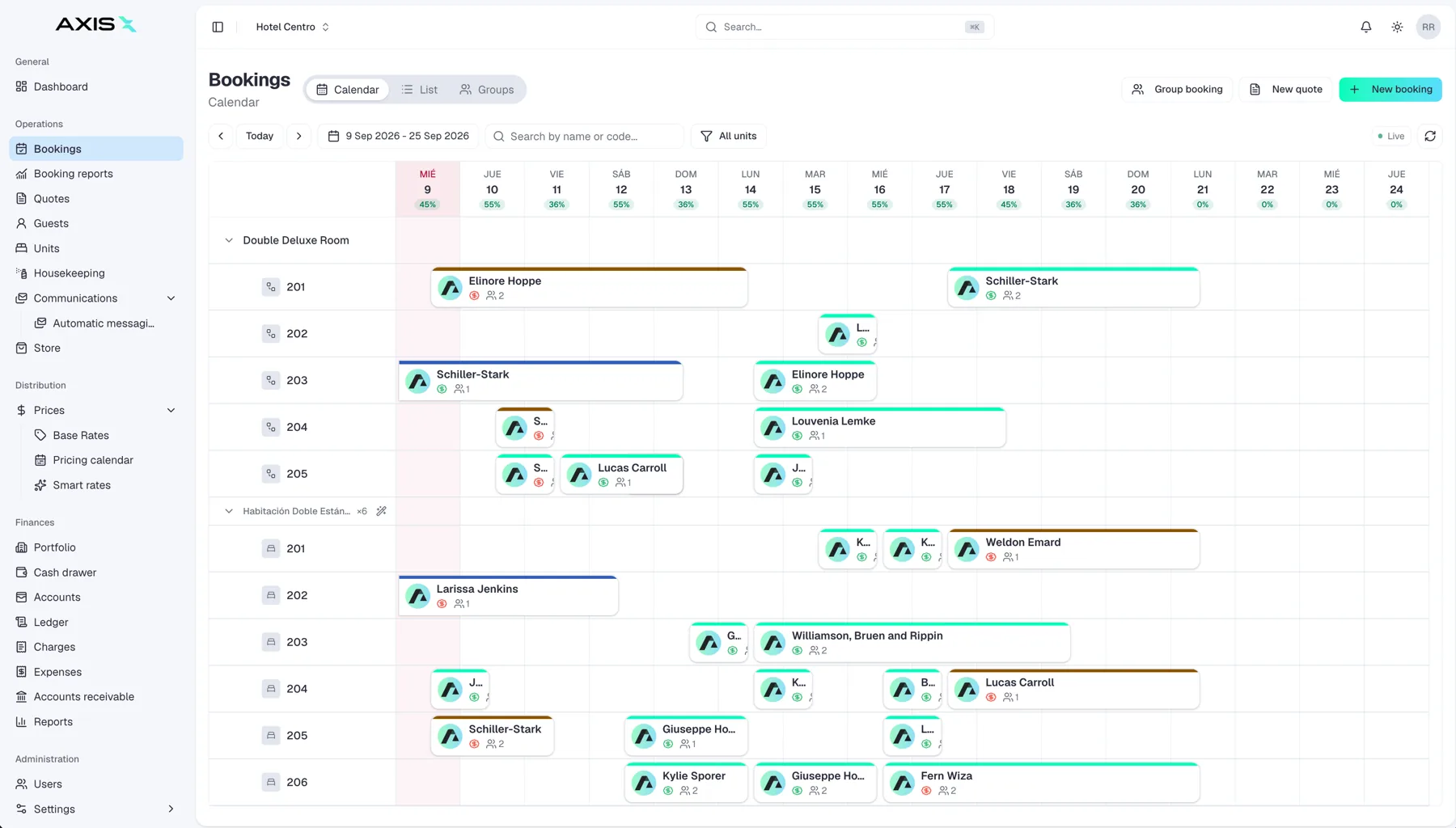
A property that turns over 40 rooms on a peak Saturday needs a very different roster from one that turns over 12. Once you know the workload by week, headcount becomes arithmetic rather than instinct. A central system that shows bookings, arrivals and room turnovers in one place makes this a ten-minute exercise instead of a spreadsheet project.
Plan for the shoulders
The ramp-up and ramp-down weeks are where most properties over- or under-staff. Schedule seasonal starts a week or two before the peak, so training happens on quieter days.
Hire early, and hire for the right thing
The best seasonal candidates are gone by the time the season starts. Begin recruiting well ahead, and start with the people who already know the property.
- Contact last season's good performers first; a returning employee is worth several new hires in training time
- Ask current staff for referrals; people tend to recommend those they would want to work alongside
- Be honest in the posting about hours, physical demands and the end date; surprises cause early quits
When interviewing, hire for reliability and attitude over hospitality experience. You can teach someone to make a bed to standard in a week; you cannot teach them to show up on time.
Cross-train the core team before the season
Cross-training is the quiet advantage of well-run properties. When the permanent team can each cover more than one role, seasonal staff fill in around a stable core rather than holding it up.
Before the peak:
- Train front desk staff to do a basic room inspection
- Train housekeeping leads to handle a simple check-in
- Make sure more than one person can run the night audit, handle a refund or process a group arrival
Cross-training also protects you when a seasonal hire does not work out. The gap is covered by someone who already knows the standard, and the guest never notices.
Onboard fast without skipping the basics
Seasonal staff typically have days, not weeks, to become useful. That is fine if onboarding is designed for it.
The first day
Walk the property, meet the team, learn the systems they will actually touch. A housekeeping attendant needs the task board on their phone and a clear standard for one room type; they do not need the full rate strategy.
The first week
Pair each new hire with an experienced buddy. Shadow first, then do the job with the buddy watching, then do it alone with a check at the end of the shift. Keep the standard visible: a photo of the finished room, a one-page checklist for check-in, a script for the three most common guest questions.
Systems that are easy to learn
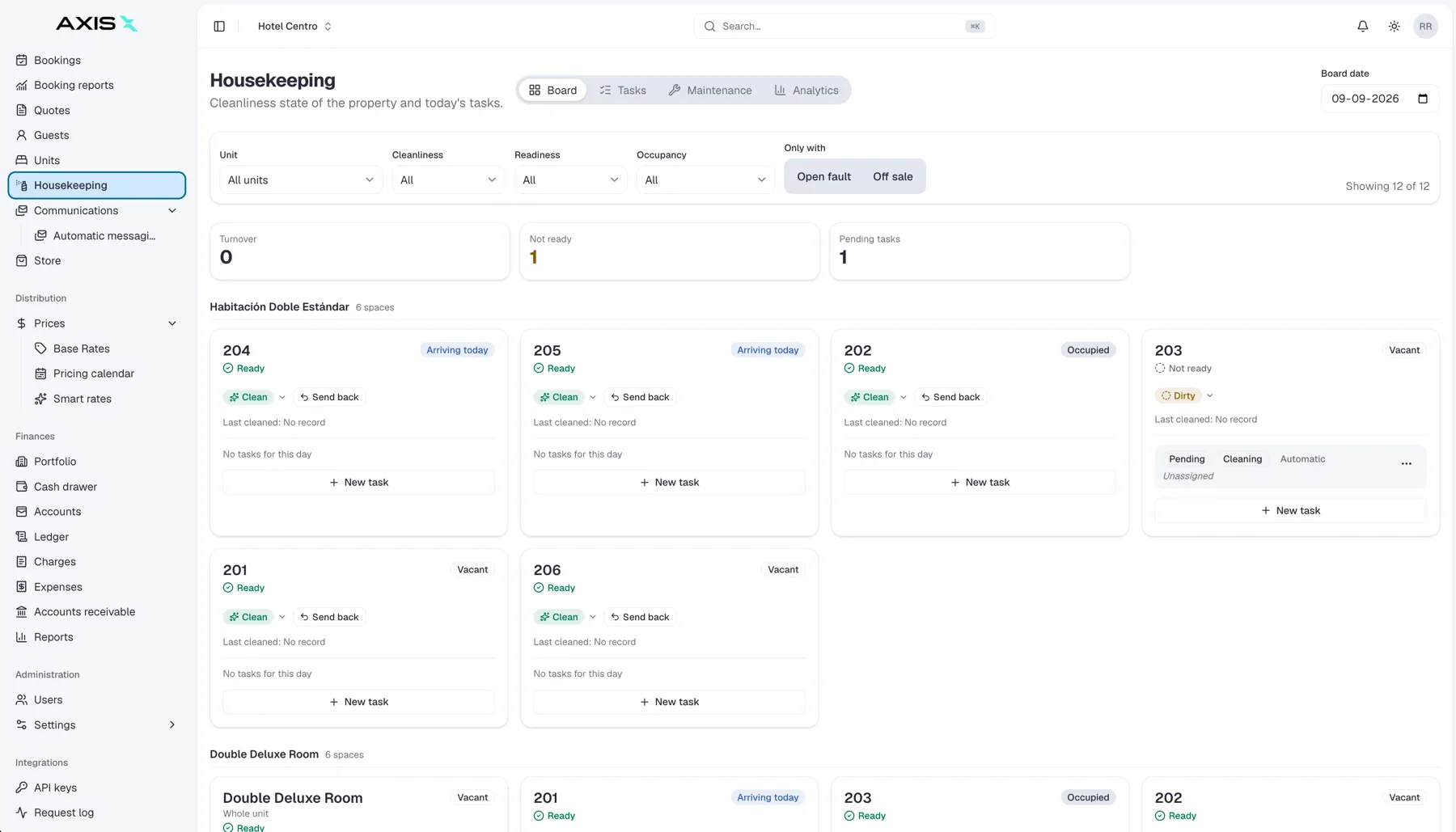
The simpler the tools, the faster the onboarding. If a new attendant can see their rooms, mark them clean and report a maintenance issue from one screen, the training is mostly done. Complicated systems turn every seasonal hire into a support ticket.
Keep standards high with seasonal staffing
The risk in seasonal staffing is not that temporary staff are worse; it is that the standard becomes vague when the people who defined it are busy.
- Write the standard down in the plainest possible form, with pictures where it helps
- Inspect more, not less, during the first weeks of the season, and treat inspections as coaching rather than policing
- Give quick feedback the same day; a correction in the afternoon is worth ten at the end of the week
- Make supervisors visible on the floor rather than in the office
Track a couple of numbers weekly: inspection pass rate for housekeeping, complaint count for the front desk. If they slip, the cause is usually a training gap you can close in a day.
Retain people between seasons
The cheapest seasonal hire is the one who comes back. Retention between seasons is mostly about how the last season ended.
- Do a short exit conversation with everyone: what worked, what did not, would they return
- Keep in touch with the good ones during the off-season, with a message a few months out asking if they are available
- Offer returning staff something concrete: a higher starting rate, first pick of shifts, a shorter onboarding
- Where possible, offer partial off-season work (deep cleaning, maintenance, projects) to a few key people
Properties that treat seasonal staff as a pool they maintain, not a crowd they replace, spend far less of every spring on recruiting and training.
Frequently asked questions
When should we start hiring for high season?
Earlier than feels necessary. Most properties benefit from posting roles two to three months ahead and confirming returning staff even sooner, so that the last weeks before the peak are spent training rather than interviewing.
How do we keep quality when half the team is new?
Stable core, clear written standards, frequent inspections used as coaching, and simple systems that new staff can learn in a day. Quality slips when the standard lives in someone's head and that person is too busy to explain it.
Is it worth cross-training permanent staff?
Yes. Cross-training makes the core team resilient to no-shows and early quits, gives permanent staff more variety, and means seasonal hires are supporting a stable operation rather than propping one up.


 Direct
 Booking.com
 Airbnb
 Expedia