
Operations
Front desk operations: best practices that hold up
Aug 31, 2026 · 6 min read

On this page
The front desk is the one place in a property where every other department becomes visible. A late room, a billing error, a broken shower: the guest brings it to the desk, and whoever is standing there has to solve it. Strong front desk operations are less about charm and more about routine: a clear arrival flow, a clean departure, handovers that do not lose information, and a night audit that catches mistakes before they become disputes.
Here is what that routine looks like in practice.
Design the arrival flow before the guest walks in
Check-in should feel effortless to the guest and be almost mechanical for the team. That only happens when the preparation is done earlier in the day.
Before arrival
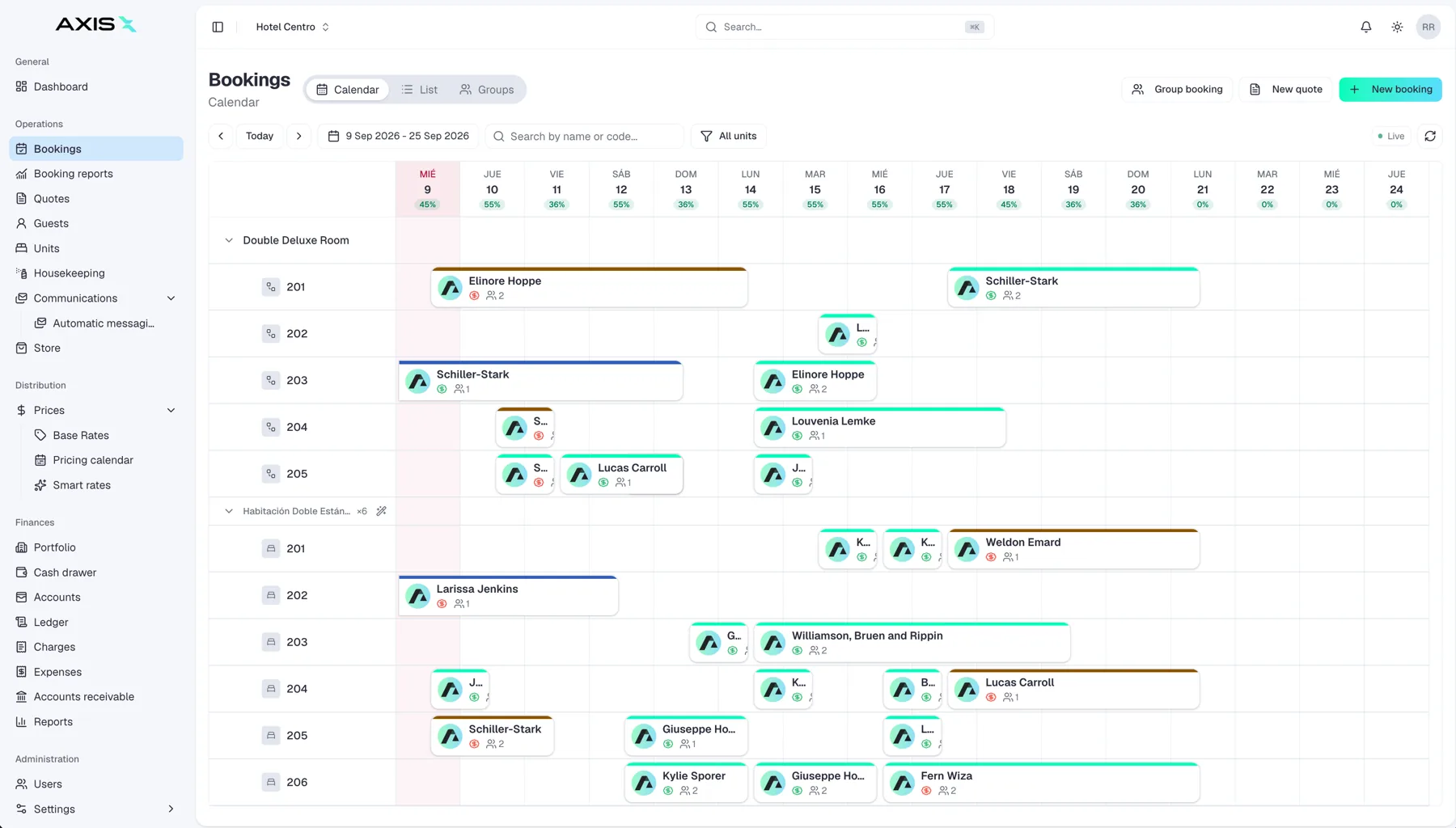
- Review today's arrivals in the morning and flag anything unusual: early check-in requests, VIPs, groups, special occasions, unpaid balances
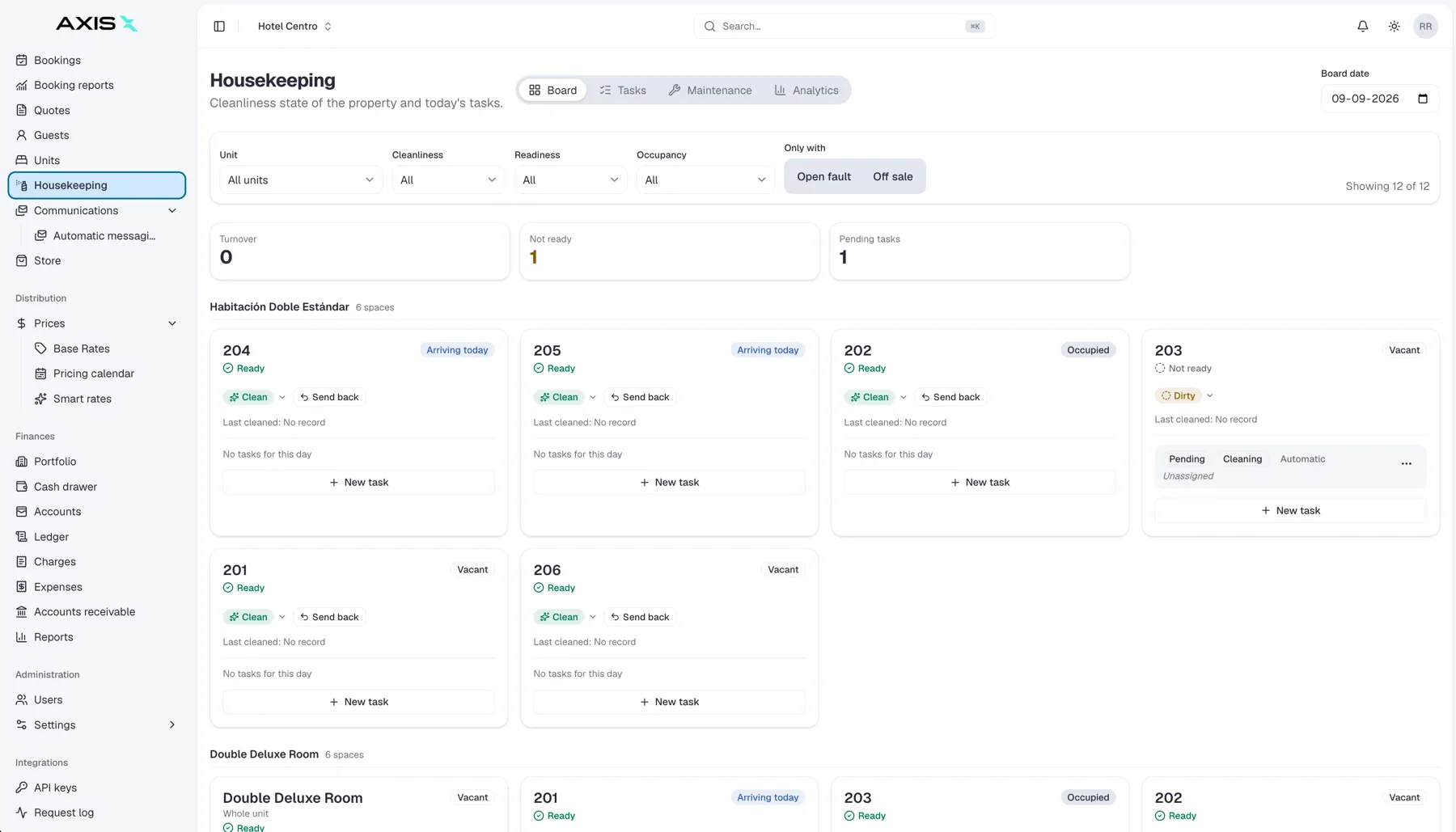
- Confirm room assignments against housekeeping status, so nobody is sent to a room that is still being cleaned
- Pre-authorize payment where your policy requires it, so the desk is not asking for a card late at night
At the desk
Greet, verify identity, confirm dates and rate, collect what is needed, hand over the key, explain the essentials (breakfast, Wi-Fi, checkout time) and stop. Guests remember a short, confident check-in far more fondly than a long, apologetic one. If the room is not ready, say when it will be, offer to store bags, and write the promise down where the whole team can see it.
Make departures as deliberate as arrivals
Checkout is where money is confirmed and where last impressions are formed, and it is often rushed.
- Prepare folios the night before for next-day departures, so charges are reviewed before the guest is standing at the desk
- Ask about extras (minibar, late breakfast, parking) rather than discovering them later and chasing a card on file
- Confirm the departure in the system immediately, so housekeeping sees the room as vacant dirty within seconds and can start the turnover
If your reservation system, payments and housekeeping share one record per room, a checkout is one action instead of three. If they do not, build a checklist so the three steps happen every time.
Hand over the shift, not just the keys
Most front desk errors are not made by the person on shift; they are inherited from the previous one. A guest was promised a late checkout, a room move was agreed, a refund was "going to be processed", and the next shift never heard about it.
A handover should take a few minutes and cover the same items every time:
- Open promises to guests, with the room number and what was agreed
- Rooms with issues (out of order, pending maintenance, noise complaints)
- Arrivals still expected and anything unusual about them
- Cash and payment status, including any pending authorizations
- Anything the manager needs to know tomorrow
Write it down in a shared log, not on sticky notes. The point of a handover is that a guest should never have to explain their situation twice because the staff changed.
Handle requests and complaints with one script
Requests are easy when they have a path: the guest asks, the desk logs it, the right person gets it, and the desk confirms it happened. Complaints follow the same path with more care.
The order matters
Listen fully, acknowledge the problem without arguing about who caused it, state what you will do and by when, then do it and close the loop. Most guests do not expect perfection; they expect to be believed and to see movement.
Give the team authority
Decide in advance what a front desk agent can offer without asking a manager: a room move, a small credit, a free late checkout. Agents who have to "check with someone" for every complaint make small problems bigger by making the guest wait.
Log every complaint, even the resolved ones. The pattern over a month is more useful than any single incident.
Run a night audit that actually audits
The night audit closes the business day. Done well, it is the last line of defense against errors in front desk operations; done badly, it is a button someone presses in the middle of the night.
At minimum, the audit should:
- Confirm every expected arrival either checked in or was marked a no-show, and that no-show charges were applied per policy
- Check that every in-house room has a rate posted for the night and that the rate matches the reservation
- Reconcile payments taken during the day against what the system shows
- Review the room status list against reality: occupied rooms should be occupied, vacant rooms should be vacant
- Post the daily report where the manager will see it in the morning
Modern systems automate much of this, which is helpful as long as someone still reads the exceptions. The audit is only useful if a human looks at what did not reconcile.
What a good front desk operations checklist contains
Checklists are not for people who do not know the job; they are for people who know it well enough to skip steps when it gets busy. A good one is short, per shift, and lives where the shift actually works.
Morning: review arrivals and departures, check room status against housekeeping, confirm any early arrivals, review the overnight log. Afternoon: prepare next-day departures, chase pending payments, confirm room readiness for late arrivals. Evening: complete the handover log, secure cash, run the audit checklist, note anything for the manager.
Keep it to one page. If nobody can complete it on a busy day, it is too long.
Frequently asked questions
How long should a check-in take?
Usually only a few minutes when the preparation was done earlier: identity verified, payment handled, room assigned and ready. Most delays come from missing information, not from slow staff.
Does a small property need a night audit?
Yes, even if it is simplified. Someone should confirm each day that arrivals, rates and payments reconcile. Small errors that go unnoticed for a week are much harder to explain to a guest or an accountant later.
What is the most common front desk mistake?
Losing information between shifts. A promise made in the afternoon that the evening team never hears about turns into a complaint at night, and the guest experiences it as the property not caring.


 Direct
 Booking.com
 Airbnb
 Expedia