
Operations
Preventive maintenance for hotels and rentals: a guide
Aug 10, 2026 · 5 min read
Maintenance in most properties is reactive: a guest reports a dripping tap, someone fixes it, and the next room with the same tap waits for its own complaint. Preventive maintenance flips the order. You inspect, you schedule, you replace things before they fail, and the guest never files the complaint. It costs less, it protects revenue, and it turns maintenance from a series of emergencies into a routine. Here is how to set it up in a hotel, a rental or a hostel.
Start with an asset list
You cannot maintain what you have not written down. An asset list is a simple inventory of everything that can break, by room and by common area:
- In rooms: air conditioning units, water heaters, safes, TVs, locks, showers, mattresses
- In common areas: boilers, pumps, elevators, fire systems, pool equipment, kitchen appliances
- Outside: roofs, gutters, exterior lighting, gates, parking barriers
For each item, note the model, the install date, the last service and the next one due. It does not need to be sophisticated; a shared spreadsheet is better than nothing, and a maintenance module in your property system is better still because it can link each asset to a room and a ticket.
Prioritize by impact
Not every asset deserves the same attention. A broken safe is an inconvenience; a failed water heater takes a room off sale. Mark the assets whose failure makes a room unsellable and put them first on the schedule.
Make room inspections routine, not occasional
Housekeeping sees every room daily, but they are looking for cleanliness, not wear. A separate maintenance inspection, done on a rotation, catches what cleaning misses: a slow drain, a loose handle, a cooling unit that is louder than it was.
- Inspect each room on a fixed cycle, typically every few months, with a short checklist
- Include the things guests notice but rarely report: dim lights, slow Wi-Fi, squeaky doors, stained grout
- Log every finding, even the ones fixed on the spot, so the history builds
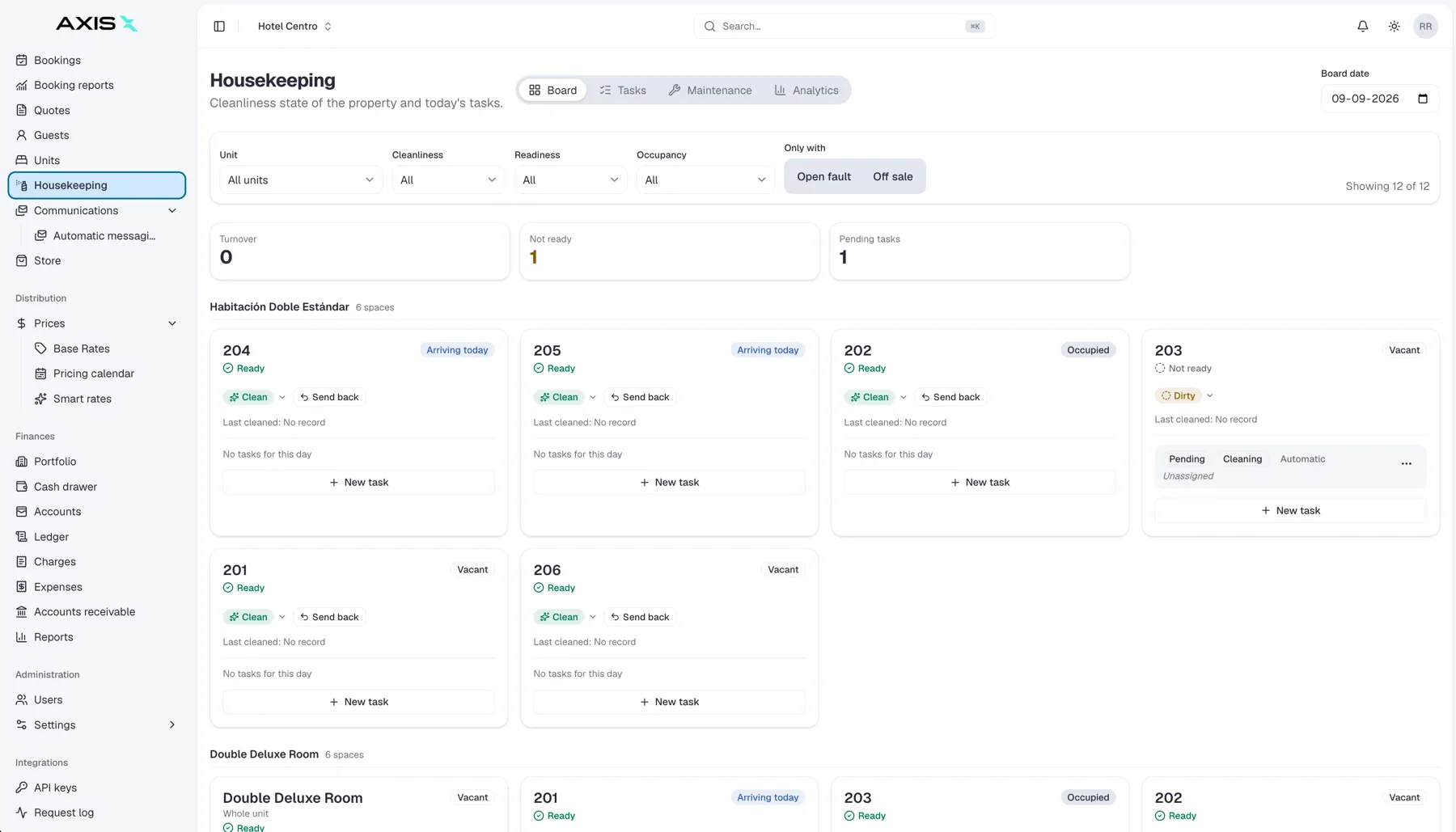
Train housekeeping to report anything unusual during cleaning, with a photo if possible. They are your early warning system, and a one-tap report from their task board is far more likely to happen than a verbal note at the end of the shift.
Tie maintenance tickets to room status
The biggest gap in most properties is between maintenance and the front desk. A ticket sits in someone's inbox while the room is sold to a guest who then discovers the problem.
The fix is simple: every maintenance ticket should be attached to a room, and the room status should reflect it.
- A minor issue (a lamp, a remote) keeps the room sellable but shows a note the front desk can see
- A serious issue (no hot water, broken lock, AC failure) changes the status to out of order until the ticket is closed
- Closing the ticket returns the room to the housekeeping flow, so it is cleaned and inspected before it is sold again
When the reservation system, housekeeping and maintenance share one record per room, this happens automatically. If they do not, agree a manual rule: no room goes back on sale until the person who fixed it and the person who inspected it both say so.
Use seasonal preventive maintenance checklists
Some maintenance follows the calendar. Before the hot season, cooling systems get serviced; before the cold season, heating and insulation; before the rainy season, roofs and drainage. Writing these down as seasonal checklists prevents the annual scramble.
A typical rotation looks like this:
- Before high season: service every AC unit, test every water heater, check pool equipment, replace worn mattresses and linen, walk every room for wear
- After high season: deep-clean and repair what the peak wore out, review the asset list for anything approaching end of life
- Before low season: schedule the big jobs (repainting, floor work, plumbing upgrades) when rooms can be taken out of service cheaply
Low season is when preventive maintenance pays for itself. A room out of order in a quiet week costs almost nothing; the same room out of order on a sold-out weekend costs a full night's revenue and possibly a guest.
When to take a room out of order
Taking a room off sale is a revenue decision as much as a maintenance one, so it deserves a clear rule rather than a judgment call under pressure.
Take it out of order when
- The issue affects safety, security or basic comfort (locks, hot water, heating or cooling, electrical faults)
- The repair will be noisy or messy while a guest is present
- The problem would generate a complaint that costs more than the room revenue
Keep it sellable when
- The issue is cosmetic or minor and can be fixed between stays
- You can note it on the room so the front desk avoids assigning it to a demanding guest
Whatever you decide, record the reason and the expected return date on the ticket. Out-of-order rooms that nobody owns tend to stay out of order for weeks, quietly lowering your available inventory and your revenue with it.
Frequently asked questions
How often should rooms have a maintenance inspection?
A full inspection every few months works for most properties, with a lighter check whenever housekeeping flags something. Higher occupancy wears rooms faster, so busy properties benefit from shorter cycles.
Should small rentals bother with an asset list?
Yes, even for a single unit. Knowing when the water heater was installed and when the AC was last serviced is what lets you replace things on your schedule rather than the guest's.
How does an out-of-order room affect revenue?
It removes that room from availability on every channel, so it cannot be sold and does not count toward occupancy. On busy nights that is real lost revenue, which is why planned repairs belong in low season and urgent ones deserve a fast turnaround.
 Direct
 Booking.com
 Airbnb
 Expedia