
Vacation rentals
Guest screening and house rules for short-term rentals
Jun 16, 2026 · 6 min read

Most guests are exactly who they say they are, arrive on time and leave the place in good shape. Guest screening exists for the small share who are not, and house rules exist so that everyone else knows what "good shape" means. Both are easier to get right before a problem than after one. This guide covers what to check before you accept a booking, how to write rules people actually read, how deposits and damage policies work, what to do about parties and noise, and how to keep the whole thing fair.
Guest screening before you accept
Screening is not about suspicion. It is about matching the guest to the property and confirming that the person booking is the person staying.
What to verify
- Verified identity on the marketplace. Airbnb, Booking.com and Vrbo each have some form of identity verification; prefer bookings that have it.
- Reviews from other hosts, and how the guest responded to problems if any are mentioned.
- The purpose of the trip and the number of guests. A one-bedroom apartment booked by one person "for a birthday" deserves a follow-up question.
- Whether the booking matches your property. A large group in a quiet residential building is a risk for your neighbor relationships, not only your furniture.
- Local check-ins by people who live nearby, which sometimes signal an event rather than a stay. Ask, politely.
A short, friendly message before confirming often tells you everything: "Thanks for booking. Who will be staying and what brings you to town?" Vague or evasive answers are information too.
Keep it consistent
Apply the same questions to every booking. Consistency protects you from unfair treatment claims and keeps your own judgment honest. Never screen on characteristics that anti-discrimination rules protect; those rules vary by place, so check what applies to you.
House rules people actually read
Long rule lists are skipped. Guests read the first five lines and the ones that mention money. Write for that.
- Put the rules that matter most at the top: maximum guests, no parties, quiet hours, smoking, pets.
- Use one line per rule, in plain language, with the consequence when there is one.
- Explain the reason when it is not obvious. "Quiet hours after 10 pm, the walls are thin and the neighbors work early" gets more compliance than "quiet hours after 10 pm."
- Repeat the top three rules in the check-in message and on a small card inside the property.
- Keep the full list in the listing so that acceptance of the booking counts as acceptance of the rules.
Rules you do not enforce are not rules. If you list twelve and enforce four, list four.
Deposits and damage policies
A deposit changes behavior more than it covers losses. Even a modest one signals that the property is looked after.
Options that work
- A marketplace damage protection or deposit hold, where the channel manages the process. Simpler, but the rules and limits belong to the channel.
- A pre-authorization on the guest's card, released after checkout. Common for direct bookings; make sure your payment setup supports holds rather than charges.
- A clear damage policy without a deposit, relying on documentation and the marketplace's resolution process.
Whatever you choose, document the property before each stay with dated photos, and again after each checkout. Claims without evidence rarely succeed, and evidence without a policy is just a photo.
Charge for actual damage, not for wear. A stained towel is part of the business. A broken door is not.
Parties and noise
Parties are the most common serious problem in short-term rentals, and they are largely preventable.
- Set a realistic maximum occupancy and repeat it everywhere.
- Consider a noise monitor that measures decibels without recording audio. Tell guests it is there; disclosure is usually required and it also works as a deterrent.
- Decline one-night weekend bookings from local guests when your gut says event, and say so kindly.
- Give neighbors a phone number to reach you directly, so problems come to you before they go to the building or the authorities.
- Decide in advance what happens if a party is confirmed: a warning message, then termination of the stay under your rules and the marketplace's policy.
When you need to act, act early and calmly. A message at 11 pm that says "I can see the noise levels are high and the building has a quiet policy, could you please bring it down" solves most cases. Escalation should be rare.
Communication tone
Screening and rules only work if the tone stays warm. Guests who feel policed become defensive; guests who feel welcomed tend to look after the place.
- Ask questions as a host, not as a gatekeeper.
- Thank guests for reading the rules instead of warning them about breaking them.
- When you decline, be brief and honest: "This place is not a good fit for a group of that size, but I hope you find something great."
- When you enforce, describe what you observed and what you need, without accusations.
Keeping it fair and legal
Rules about deposits, cameras, noise, occupancy and guest data vary a lot by country and city, and they change often. Treat this article as general guidance and check what applies where your property is. Some places limit deposit amounts, some restrict any monitoring device, some require you to register guests with local authorities. Marketplaces also have their own policies that sit on top of local rules, and a house rule that contradicts the platform's policy is usually the one that loses.
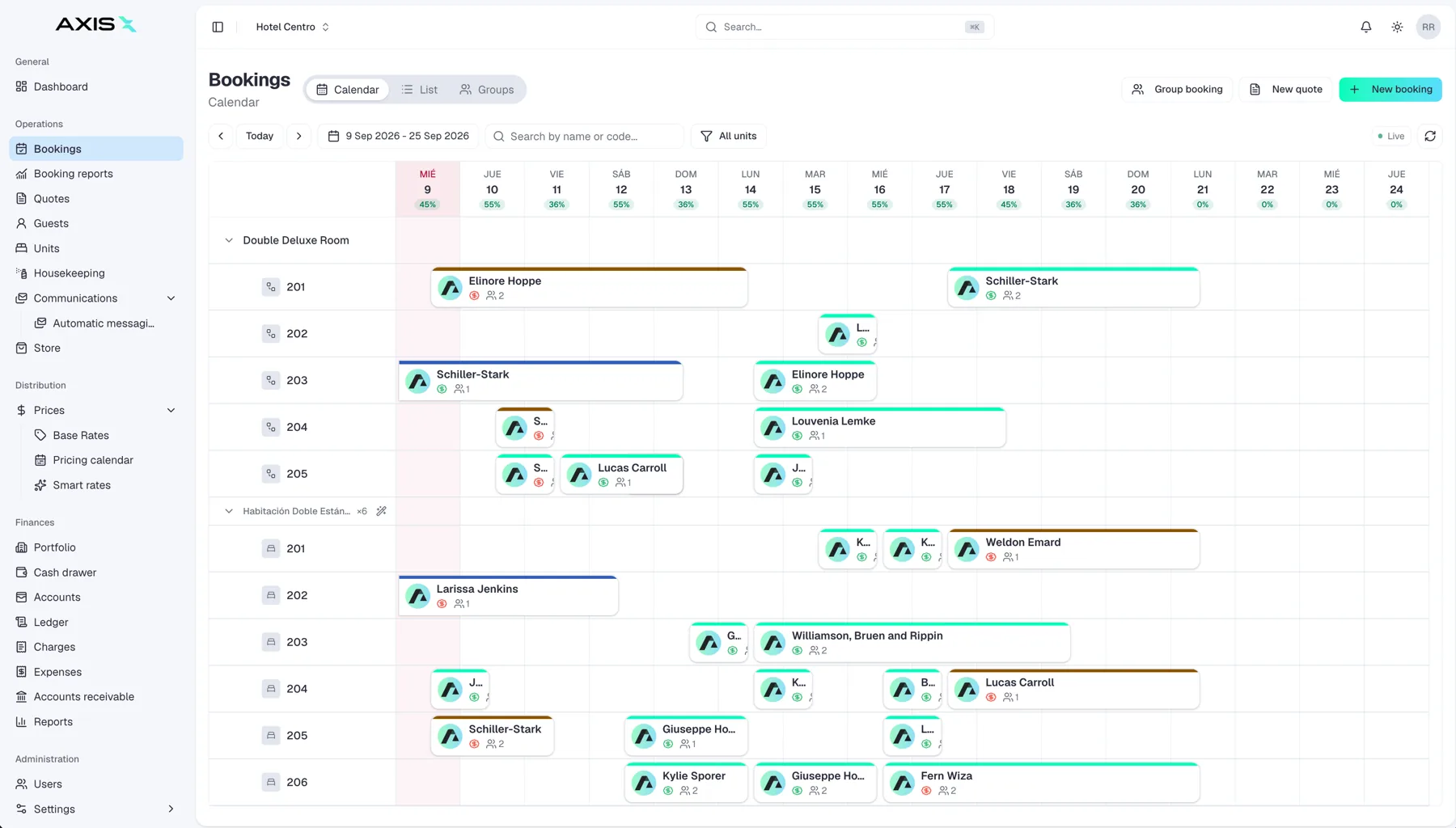
A central system where guest details, rules acceptance, payments and messages live together makes it easier to show what happened if a dispute ever reaches a marketplace or an insurer.
Frequently asked questions
Can I refuse a booking after screening?
Generally yes, as long as the reason is about the fit between the guest and the property, not about who the guest is. Say so briefly and politely, and keep your reasoning consistent across bookings.
How big should a security deposit be?
Enough to change behavior, not enough to scare off honest guests. Many hosts set it around the cost of a typical repair rather than the value of the furniture. Check local limits.
Are noise monitors allowed?
Often, when they measure sound levels only and are disclosed in the listing. Rules differ by place and platform, so confirm before installing one and never place any device inside private areas.


 Direct
 Booking.com
 Airbnb
 Expedia