
Revenue
Revenue management basics for independent hotels
Sep 4, 2026 · 6 min read

Revenue management sounds like something only big chains with a team of analysts can afford. It is not. At its core, revenue management is a set of habits: know what you sell, know when people want it, and price it accordingly. An independent hotel, a small rental portfolio or a hostel can run those habits with a spreadsheet, a calendar and thirty minutes a week. This guide covers the basics you need to start.
The three revenue management metrics that matter
You only need three numbers to see how your property is doing. Everything else builds on them.
Occupancy
Occupancy is the share of your rooms or units that were sold on a given night. Ten rooms, six sold, 60 percent occupancy. It tells you how full you are, and nothing else.
ADR (average daily rate)
ADR is the average price you actually collected per sold room. Add up the room revenue for a night and divide it by the rooms sold. If those six rooms brought in 600 dollars, your ADR is 100 dollars.
RevPAR (revenue per available room)
RevPAR is revenue divided by all the rooms you could have sold, not just the ones you did. Six rooms at 100 dollars across ten available rooms gives a RevPAR of 60 dollars. You can also get it by multiplying occupancy by ADR.
Why RevPAR matters more than occupancy
Occupancy on its own can fool you. A property can run at 90 percent occupancy and still lose money if it got there by discounting every night. Compare two weeks at a 10 room property:
- Week one: 90 percent occupancy at 70 dollars ADR gives a RevPAR of 63 dollars
- Week two: 70 percent occupancy at 100 dollars ADR gives a RevPAR of 70 dollars
Week two earned more with fewer guests, fewer cleanings, less laundry and less wear on the rooms. RevPAR captures that trade-off in a single number, which is why it should be the metric you watch first.
Build a demand calendar
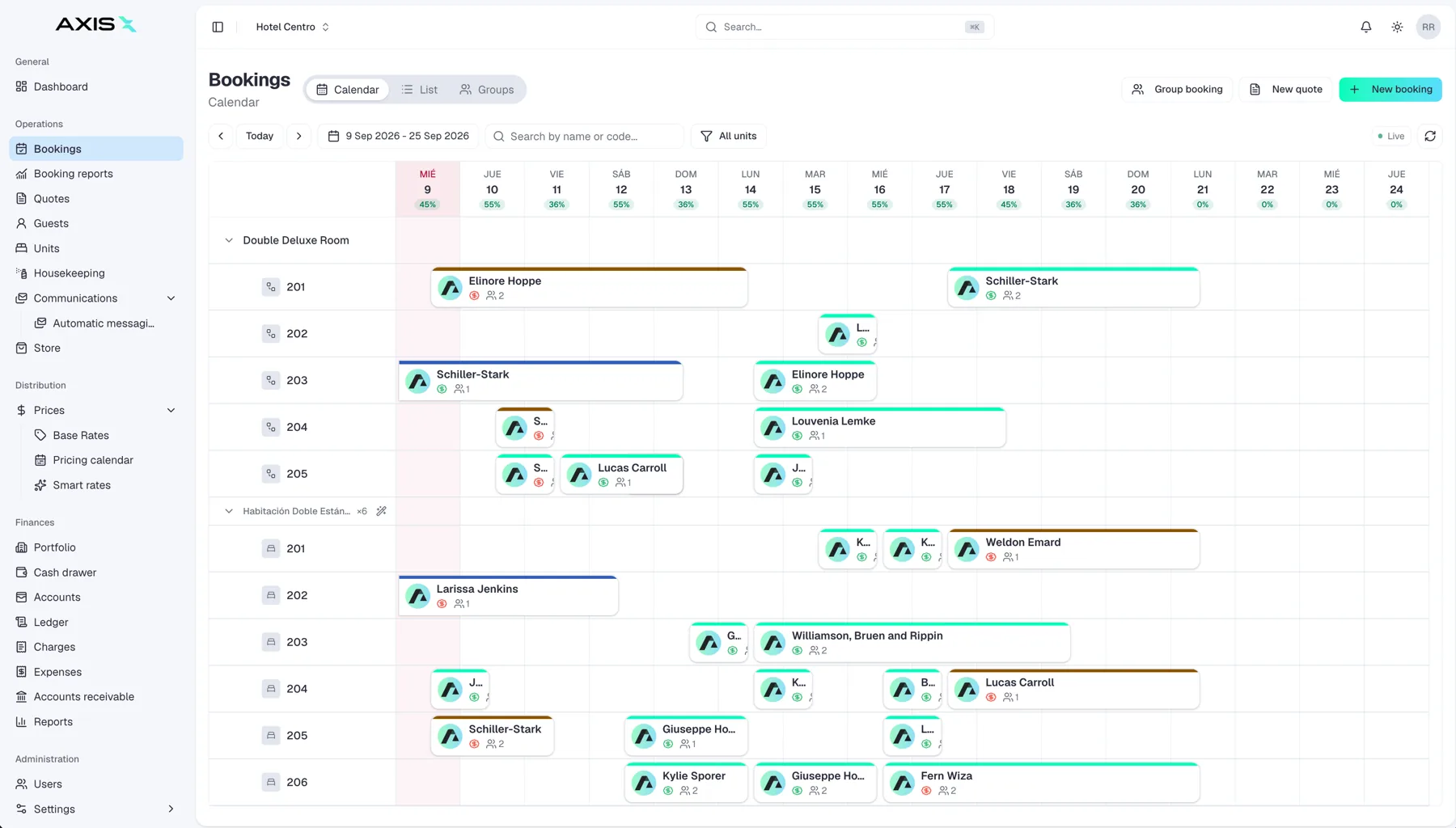
A demand calendar is a simple view of the year that marks when people want to come to your area and when they do not. It is the foundation of every pricing decision you will make.
Start with what you already know:
- Local events, festivals, conferences, sports fixtures and school holidays
- Your own history: which weeks sold out last year, which ones stayed empty
- Weather patterns and seasonal travel habits in your region
Mark each date as low, medium, high or peak demand. Keep it in a shared place your team can see. Over time, add notes on what happened: "sold out three weeks early" or "never got above half". Those notes become your most valuable pricing data.
Understand who is booking
Segmentation just means grouping your guests by how and why they book. Small properties typically see a handful of segments:
- Leisure travelers booking through online travel agencies
- Direct bookers who found you on your website or by referral
- Business travelers or contractors with weekday stays
- Groups, weddings and repeat guests
Each segment behaves differently. Leisure guests book on weekends and are price sensitive. Business guests book late and care more about location than rate. Knowing your mix tells you which levers to pull: a discount will not attract a contractor who needs a room on Tuesday, but a flexible cancellation policy might.
Simple pricing rules you can apply today
You do not need an algorithm to start. A few clear rules, applied consistently, already beat a flat rate that never changes.
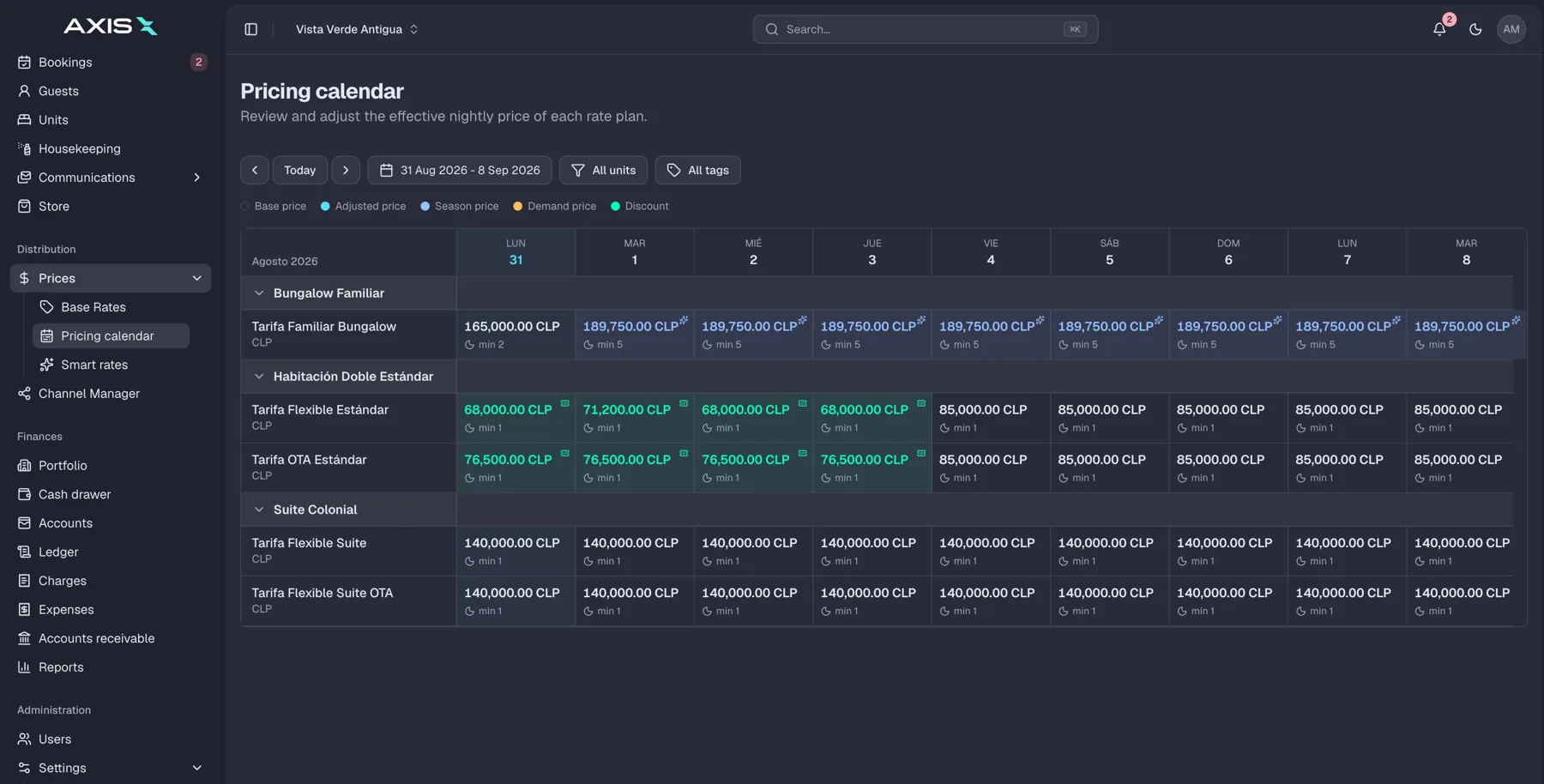
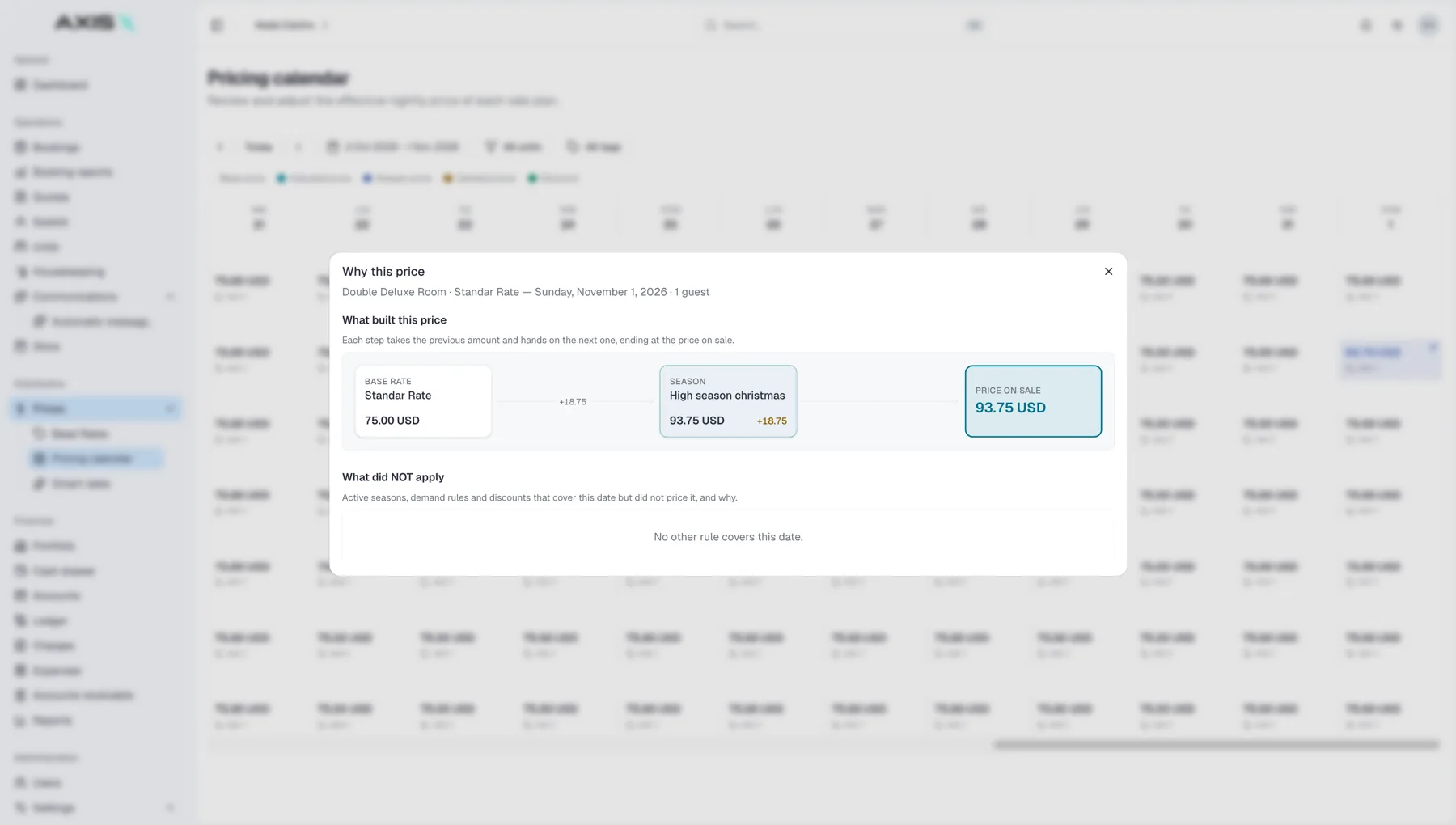
- Set a base rate for each room type in each demand season
- Raise the rate when a date is filling faster than usual for its lead time
- Lower it, within limits, when a date is close and still mostly empty
- Charge more on peak nights than on shoulder nights, even inside the same week
- Keep a floor below which you never sell, and a ceiling above which you stop raising
Write the rules down. A rule that lives in one person's head is not a rule, it is a habit that leaves when they do. When your PMS and channel manager work as one central system, as they do in Axis Pro, rules like these can be applied once and pushed to every channel at the same time.
A weekly revenue routine a small team can keep
The best plan is the one you actually follow. This routine takes about thirty minutes.
Monday: look at the next 90 days
Pull occupancy, ADR and RevPAR for each of the next twelve weeks. Compare each week against the same week last year and against your demand calendar. Flag anything that looks unusual: a high demand week that is still empty, or a low demand week that is oddly full.
Adjust the flagged dates
For each flagged date, decide one action: raise the rate, lower it, open or close a restriction, or leave it alone. Note the decision and the reason in a single line.
Review last week
Look at what actually happened. Did the dates you raised still sell? Did the dates you discounted fill? A short note each week turns into a year of real evidence about your market.
Once a month, zoom out
Update the demand calendar with new events. Check your segment mix. Confirm your floors and ceilings still make sense against your costs.
Frequently asked questions
How often should a small property change rates?
Reviewing weekly is enough to start, with quick adjustments when a big event or a sudden pickup appears. Daily changes only make sense once you have clear signals to react to and a system that pushes updates to every channel automatically.
Is a high occupancy ever a bad sign?
Often, yes. If you are consistently sold out weeks in advance, your rates are probably too low for that period. Empty rooms are a visible cost, but underpriced rooms are an invisible one, and RevPAR is how you catch it.
Do I need software to do revenue management?
You can start with a spreadsheet and the routine above. Software becomes valuable when you sell on several channels, because pushing rate changes by hand to each one is slow and error prone.



 Direct
 Booking.com
 Airbnb
 Expedia