
Revenue
Dynamic pricing for small properties: a practical guide
Aug 27, 2026 · 6 min read

Dynamic pricing means changing your rates as demand changes, instead of setting one price per season and forgetting it. Airlines do it, big hotel chains do it, and small properties can do it too, without a data science team. Dynamic pricing for a small property is mostly about watching a few signals and having clear rules for how to respond. This guide walks through the signals, the rules, and a simple way to start.
What dynamic pricing actually is
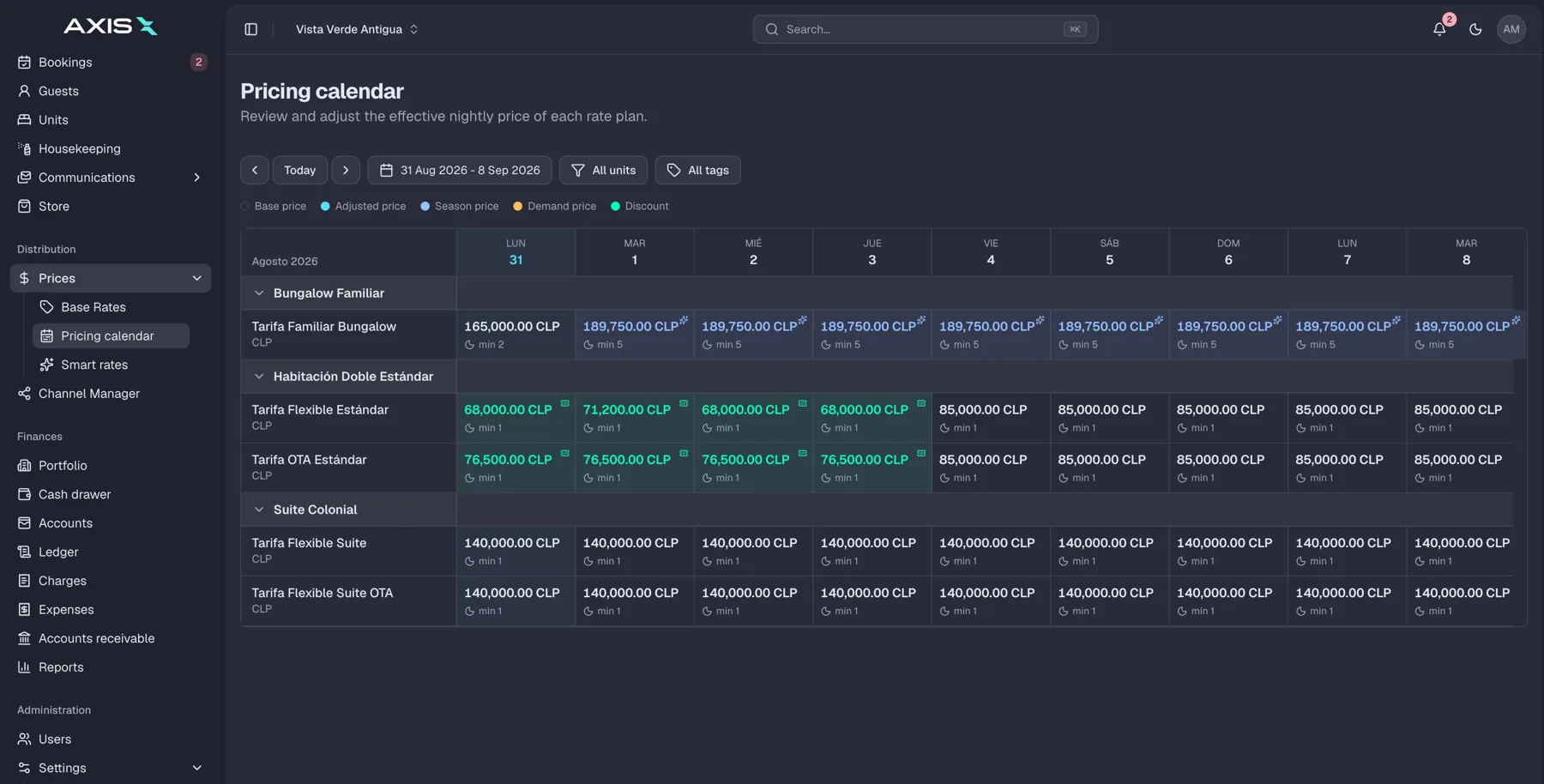
A static rate says: every night in July costs 120 dollars. A dynamic rate says: a July night costs 120 dollars by default, but more when the date is filling fast and less when it is close and still empty. The room is the same. What changes is how much the market is willing to pay for it on that particular night, and your price follows that.
The goal is not to squeeze every guest. It is to avoid two expensive mistakes: selling out early at a rate that was too low, and sitting on empty rooms at a rate that was too high.
The signals that should move a rate
Not every piece of information deserves a reaction. These five signals typically matter most for small properties.
Pickup pace
Pickup is how many bookings a date has received over a period of time. If a Saturday three weeks out already has more bookings than a usual Saturday at that lead time, demand is strong and the rate can go up. If it is behind pace, the rate may need to come down or the date may need a promotion.
Day of week
Leisure destinations fill on Fridays and Saturdays. Business destinations fill from Monday to Thursday. Your own history tells you which pattern you have. Weekday and weekend rates should almost never be the same.
Events and seasons
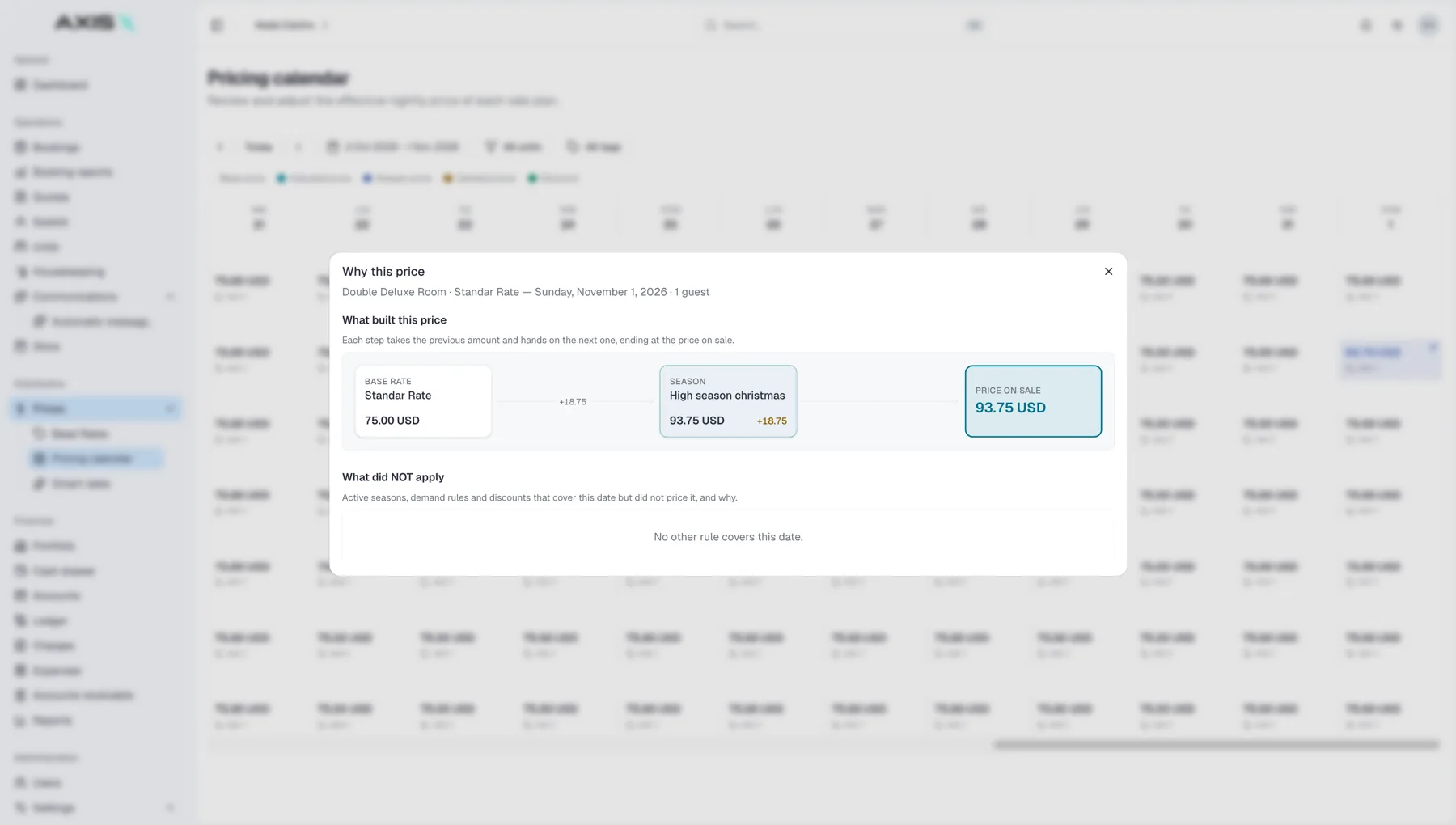
A concert, a conference, a marathon or a holiday weekend can double demand for a handful of nights. Keep those dates on a demand calendar and price them ahead of time, before the bookings arrive, not after you have sold out.
Lead time
How far in advance guests book tells you something. A date that is empty 60 days out is normal. The same date empty 5 days out is a problem. Your rules should react differently depending on how close the date is.
Competitor rates
Check what similar properties nearby are charging for the same nights. You do not need to match them, but you should know if you are far above or far below, and be able to explain why.
Rules versus algorithms
There are two ways to turn signals into prices.
Rules are statements you write yourself: "if a Saturday is more than 80 percent booked 14 days out, raise the rate by 15 percent". They are transparent, easy to explain to your team, and easy to fix when they misbehave.
Algorithms look at the same signals plus a lot of history and adjust rates on their own. They can react faster and catch patterns you would miss, but they need enough data to learn from, and a small property often does not generate that much.
For most small properties, rules are the right starting point. You can move to an automated approach later, once you know your market well enough to check whether the algorithm is making sensible calls.
Guardrails: floors and ceilings
Whatever moves your rates, two limits should never move with them.
- A floor is the lowest rate you will accept. Set it above your cost of servicing the room, including cleaning, supplies, commission and utilities. Below the floor, an empty room is better than a sold one.
- A ceiling is the highest rate you will charge. It protects you from prices that damage your reputation or generate cancellations when guests find something cheaper.
Set floors and ceilings per room type and per season, and review them whenever your costs change. They are the part of dynamic pricing that keeps automated mistakes from becoming expensive ones.
Start with three rules and grow
You do not need a full rulebook on day one. Start with three rules, run them for a month, and add more only when you see a pattern the current rules miss.
Rule one: weekend uplift
Weekend nights cost a fixed percentage more than weekday nights in the same season. Pick a number based on your history and apply it everywhere.
Rule two: pace trigger
If a date reaches a high occupancy threshold earlier than usual, raise its rate by a set step. If it crosses another threshold, raise it again. Stop at the ceiling.
Rule three: last-minute floor protection
If a date is within a few days and still well below normal occupancy, lower the rate in one or two steps toward the floor, never below it.
Once those three run smoothly, add event pricing, then lead-time rules, then competitor checks. Each new rule should answer a real situation you saw, not a hypothetical one. Keeping all rules in one central system that pushes to every channel makes each addition cheap; keeping them in five extranets makes each one a chore.
How to know it is working
Track RevPAR, not just occupancy, week by week against the same week last year. Dynamic pricing is working when RevPAR goes up while occupancy stays roughly stable. If occupancy drops sharply, your uplifts are too aggressive. If you sell out constantly, your triggers are too timid.
Frequently asked questions
Will guests be annoyed by changing prices?
Guests are used to it from airlines and every large booking site. What upsets them is inconsistency: a lower price on one channel than another for the same night. Keep rates in sync across channels and price changes over time are rarely an issue.
How much should a single rule change the rate?
Small steps are safer than big jumps. Adjustments in the range of 5 to 15 percent per trigger are common for small properties, and they can stack as a date fills. Large single moves are harder to reverse if the signal turns out to be noise.
Should I price every room type dynamically?
Start with the room type that has the most inventory, because that is where the rules have the biggest effect and where you will learn fastest. Apply what you learn to the others once the first set of rules is stable.



 Direct
 Booking.com
 Airbnb
 Expedia