
Revenue
Revenue beyond rooms: the spaces you already own
Jul 7, 2026 · 6 min read
Walk through your property on a Tuesday morning. The meeting room is dark. Half the parking lot is empty. The pool is quiet until 2pm, the terrace is set but unused, and the storage room by reception holds three bikes nobody rents. None of that space is broken; it is just not for sale. Revenue beyond rooms starts with noticing that a property is full of inventory that never appears on a rate sheet, and that most of it can be sold the same way you sell a night.
This article lists the spaces most hotels, vacation rentals and hostels already own, explains how to price and run them without adding a second operation, and shows how to start small enough that the first one pays for itself in weeks.
The inventory you forgot you had
Hotels and rentals think in rooms because rooms are what the software sells. But guests, and locals, will pay for much more, and each of these behaves exactly like a room: it has a calendar, a rate and availability.
Spaces guests already ask for
- Parking, by the night or by the hour, for guests and for neighbors.
- Late checkout and early check-in, which are really time slots on a room.
- Luggage storage, bike rental, a locker for the day.
- A pool or spa day pass for people who are not staying.
Spaces locals will pay for
- A meeting room by the hour, for the small business down the street.
- A desk or a quiet corner for a remote worker who needs an afternoon out of the house.
- The terrace, the garden or the lobby bar for a private event.
- A cabana, a rooftop or a lounge for the weekend.
Spaces that fit rentals and hostels
- The shared kitchen for a cooking class.
- The common room for a film night with a small ticket.
- A garage or shed for storing surfboards, skis or bikes between stays.
- The whole ground floor for a workshop on a slow weekday.
Write your own list by walking the property with a notepad. Anything with a door, a chair or a square meter that sits idle for hours is a candidate.
Sold like rooms, run like rooms
The operational trick is refusing to manage these spaces in a side spreadsheet, a paper diary or a group chat. The moment a space lives in the same central system as your rooms, three things happen:
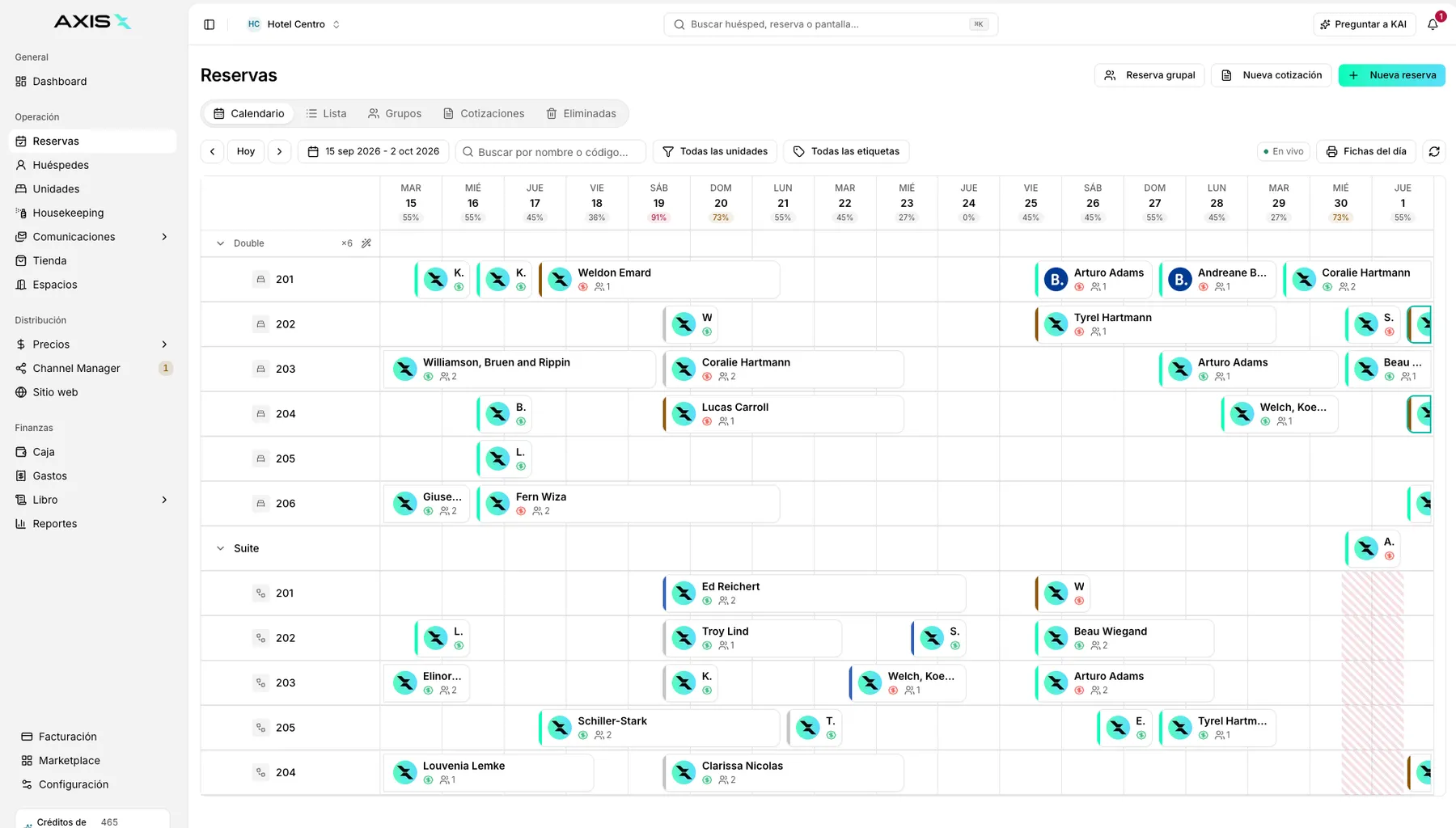
- It appears on the same multi-calendar your team already watches, so nobody double-sells the meeting room.
- It gets booked and paid through the same flow as a night, with the same deposit rules and the same receipt.
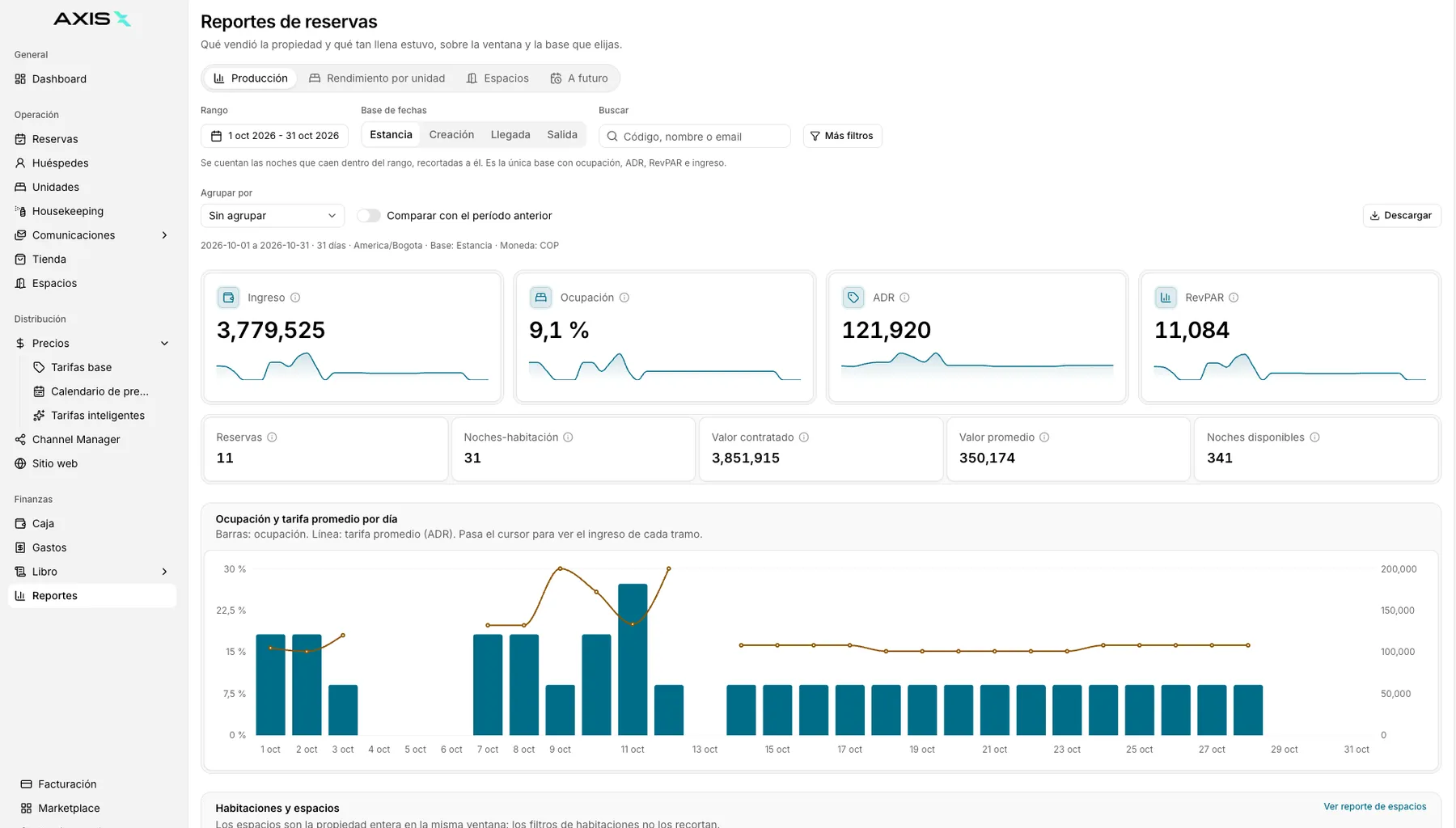
- It shows up in the same reports, so you see exactly what it earns and what it costs to deliver.
That last point is the one that keeps the idea alive. When a space is tracked separately, it looks like a favor you do for guests. When it sits next to room revenue in the monthly numbers, it becomes a line worth managing.
Define each space like a unit
Give every space the same four attributes a room has:
- A unit of time: an hour, a half day, a night, a weekend.
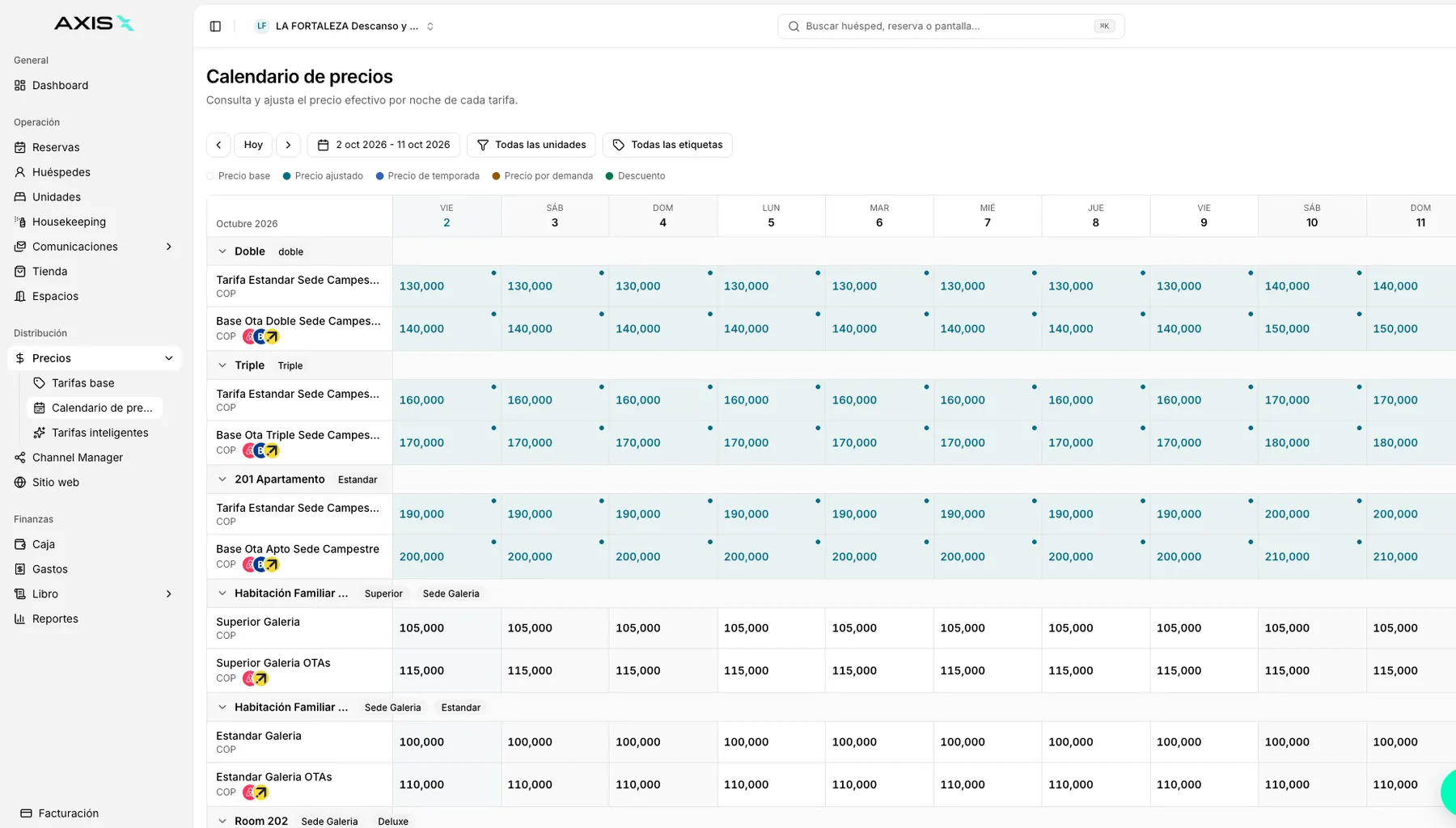
- A rate, with a different price for guests and non-guests if that makes sense.
- Availability rules: opening hours, minimum booking, buffer time for cleaning or setup.
- A capacity: how many people, cars or bikes it can take at once.
Once these are set, the space can be sold on your website, offered at check-in, or listed on marketplaces where that makes sense, without anyone inventing the process on the spot.
Pricing revenue beyond rooms
Price by the alternative, not by the cost. A guest deciding whether to pay for parking compares it with the public lot two streets away. A local booking a meeting room compares it with a coworking space or a cafe. Set the price a little below the obvious alternative and add what they cannot get there: coffee, a reception desk, a view.
A few practical guidelines:
- Keep the price list short. One or two options per space is enough to start.
- Bundle where it simplifies: a room with parking and late checkout as one package sells better than three separate add-ons.
- Charge non-guests more than guests. It rewards staying with you and keeps the spaces mostly available for the people who sleep there.
- Take payment at booking for spaces with real demand, and at check-in for small extras.
- Review the prices each season with the same discipline you apply to room rates.
Start small, measure fast
Pick one space that sits idle most days. Give it a price and a calendar. Offer it on your website and to in-house guests at check-in, and tell the team the one sentence they should use to mention it. Run it for a month.
Most properties are surprised twice: first by how quickly it books, then by how little extra work it created. That is the moment to add the second space, not before. Three well-run spaces earn more than ten that nobody remembers to offer.
Measure the result the way you measure rooms. Total revenue per available room, the figure that includes everything you sell, is the honest number for this work: if it rises while room revenue holds, the spaces are pulling their weight.
What to watch for
- Cleaning and setup time that nobody scheduled, which turns a profitable hour into a complaint.
- Spaces sold to locals at the same time guests expect to use them for free.
- Local rules on events, noise and parking that apply once you charge for access.
- Insurance cover that assumed guests only, if you open the pool or gym to day visitors.
- A booking process that lives outside your system, which quietly recreates the spreadsheet you were trying to remove.
Frequently asked questions
Which space should I sell first?
The one with the clearest demand and the least setup. Parking and late checkout are the usual winners for hotels, a meeting room or a desk for city properties, and gear storage or a common-room event for hostels and rentals.
Will selling spaces to non-guests bother my guests?
Only if it removes something they expected. Keep guest access first, limit non-guest capacity, and price non-guests higher. Done that way, a busy lobby or pool usually adds to the atmosphere rather than taking from it.
Do I need separate software for bookable spaces?
No, and a separate tool is usually the reason these ideas fade. Treat each space as a unit in the same system that holds your rooms, so it shares the calendar, the payment flow and the reports.


 Direct
 Booking.com
 Airbnb
 Expedia