
Industry trends
Hospitality trends 2027: how to prepare your property
May 26, 2026 · 5 min read

Trend articles tend to promise a different world every year. Most of what will matter in 2027 is already visible in your inbox: guests asking to check in at 11 pm without talking to anyone, a family staying nine nights with a laptop, a traveler asking whether you take their local payment app. The hospitality trends 2027 will bring are less about surprise and more about degree. This guide takes seven of them and turns each into practical preparation you can do this year.
Blended travel and longer stays
The line between a work trip and a holiday keeps blurring. A guest arrives for a conference, stays the weekend, and brings a partner for the second half. Stays get longer, and the property becomes a temporary home rather than a place to sleep.
How to prepare
- Make sure a stay of a week or more is comfortable: a real desk, good chairs, a kettle, a place to hang clothes.
- Offer weekly and monthly rates on your own site, not only on marketplaces.
- Review your cleaning cadence for long stays; every day is too much and never is too little.
- Ask at booking whether the stay is for work, leisure or both, and adapt the welcome message.
Self-service with a human backup
Guests increasingly want to do simple things themselves: check in, get a key, ask for late checkout, pay. What they do not want is to be stuck when self-service fails at midnight.
How to prepare
- Offer online check-in and a digital key or code, and keep a physical fallback at the desk.
- Publish one number or chat that reaches a person at any hour, even if that person is on call rather than on site.
- Write the self-service steps as if the guest has never seen your property, and test them on a phone.
- Track where guests drop out of the flow; a step that fails often is a step to redesign.
AI-assisted operations
Assistants that draft replies, suggest prices, flag anomalies and summarize the day are becoming normal parts of a property's toolset. The useful version is not a robot at the desk. It is a colleague that handles the repetitive half of the work and leaves decisions to people.
How to prepare
- Clean your data. An assistant working from a messy calendar or duplicate guest profiles will confidently produce messy results.
- Start with one task, such as drafting responses to routine guest questions, and review everything before it goes out.
- Decide in advance which decisions stay human: refunds, complaints, anything involving safety.
- Prefer assistants that live inside the system you already use rather than adding another login.
Direct booking, loyalty and payments
Marketplaces remain essential for reach, but the relationship with a returning guest is worth keeping for yourself. Direct booking is less about beating channel prices and more about being the easier option for someone who already knows you.
How to prepare for direct booking
- Make your booking page fast on a phone and honest about the total price.
- Give returning guests a reason to come back directly: a small perk, a flexible policy, remembered preferences.
- Collect email consent at check-in and use it sparingly and well.
- Measure the share of direct bookings monthly, and celebrate it moving, not only the total.
Payment expectations
Guests expect to pay the way they pay everywhere else: cards, wallets, local methods that are common where they live, and instant refunds when plans change. Slow refunds and failed authorizations are now a review topic.
How to prepare for payments
- Accept the local payment methods of your top source markets, not only international cards.
- Move to card holds instead of charges for deposits, so releases are instant.
- Make refunds a one-click action for staff, with the amount and the reason recorded.
- Reconcile payments with reservations automatically; manual matching is where errors hide.
Sustainability as a booking factor
For a growing share of travelers, especially those booking for companies, sustainability information is part of the decision, and vague claims are worse than no claims. Concrete practices, stated plainly, are what works.
How to prepare
- Document what you actually do: energy, water, waste, local sourcing, linen policy.
- Show it in the listing and on the property in the same words, without superlatives.
- Look at any local or platform certification that fits your size; some are simpler than they seem.
- Track one or two numbers over time so you can show progress rather than adjectives.
Hospitality trends 2027: fewer systems, one central record
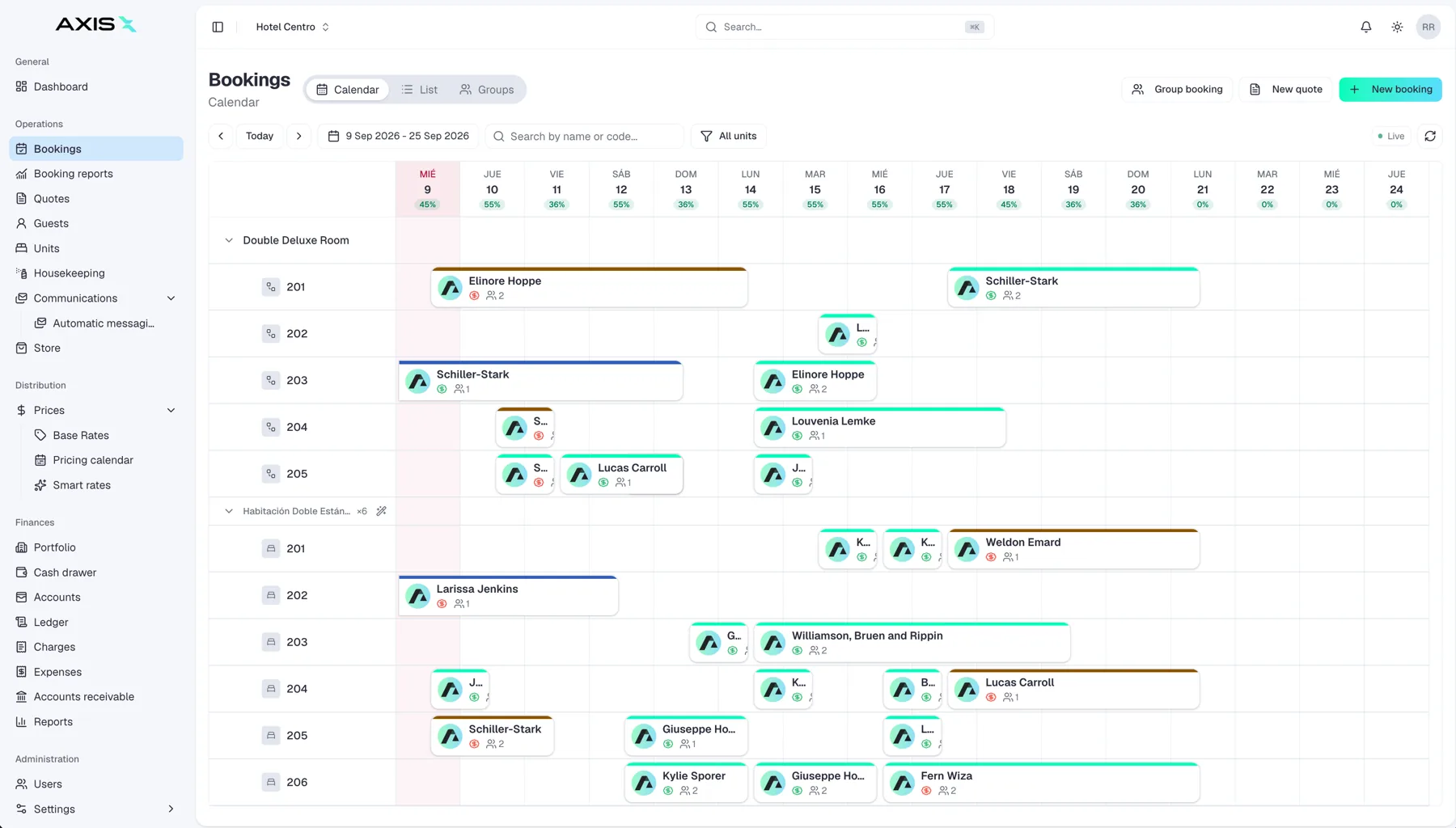
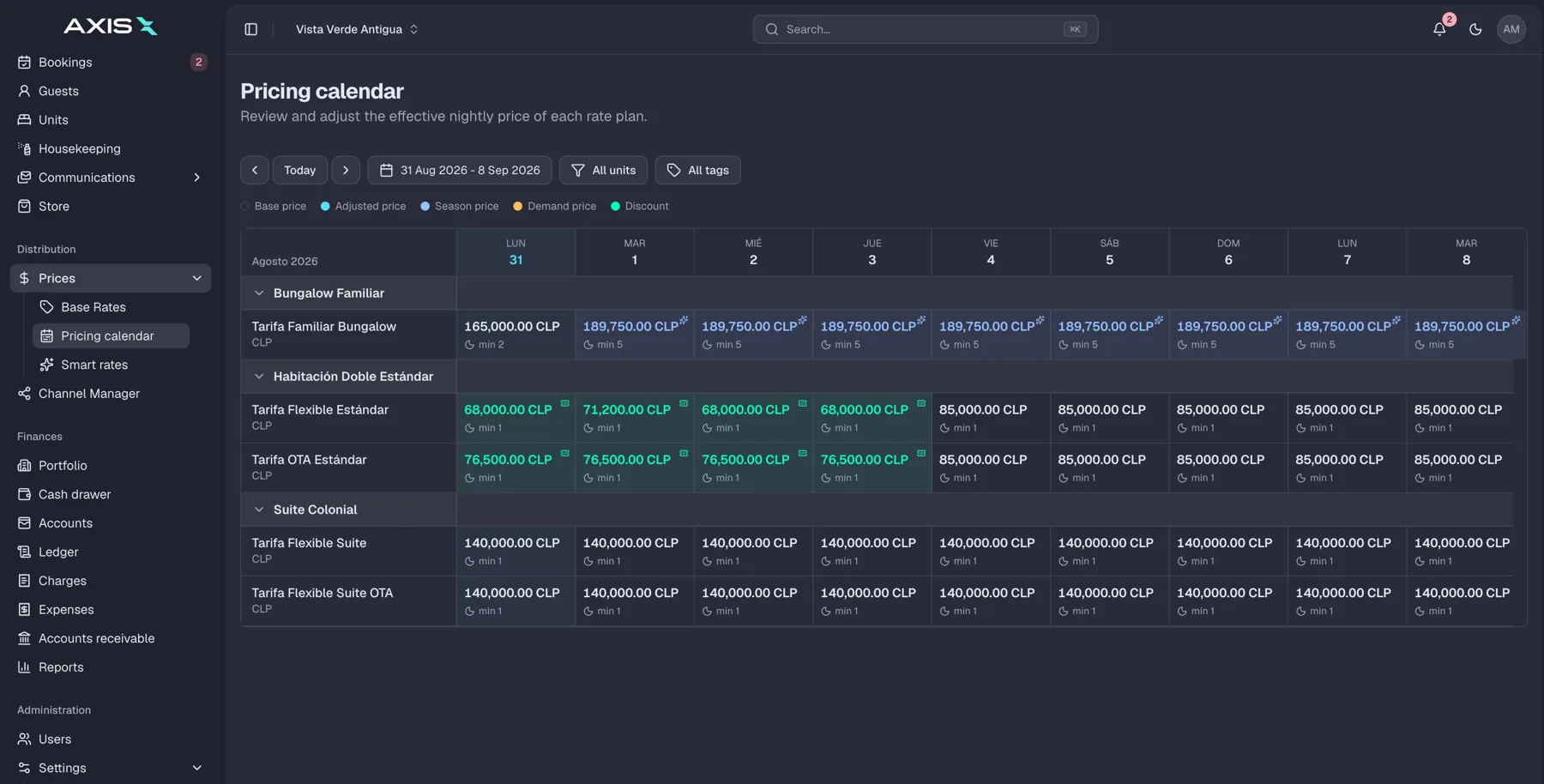
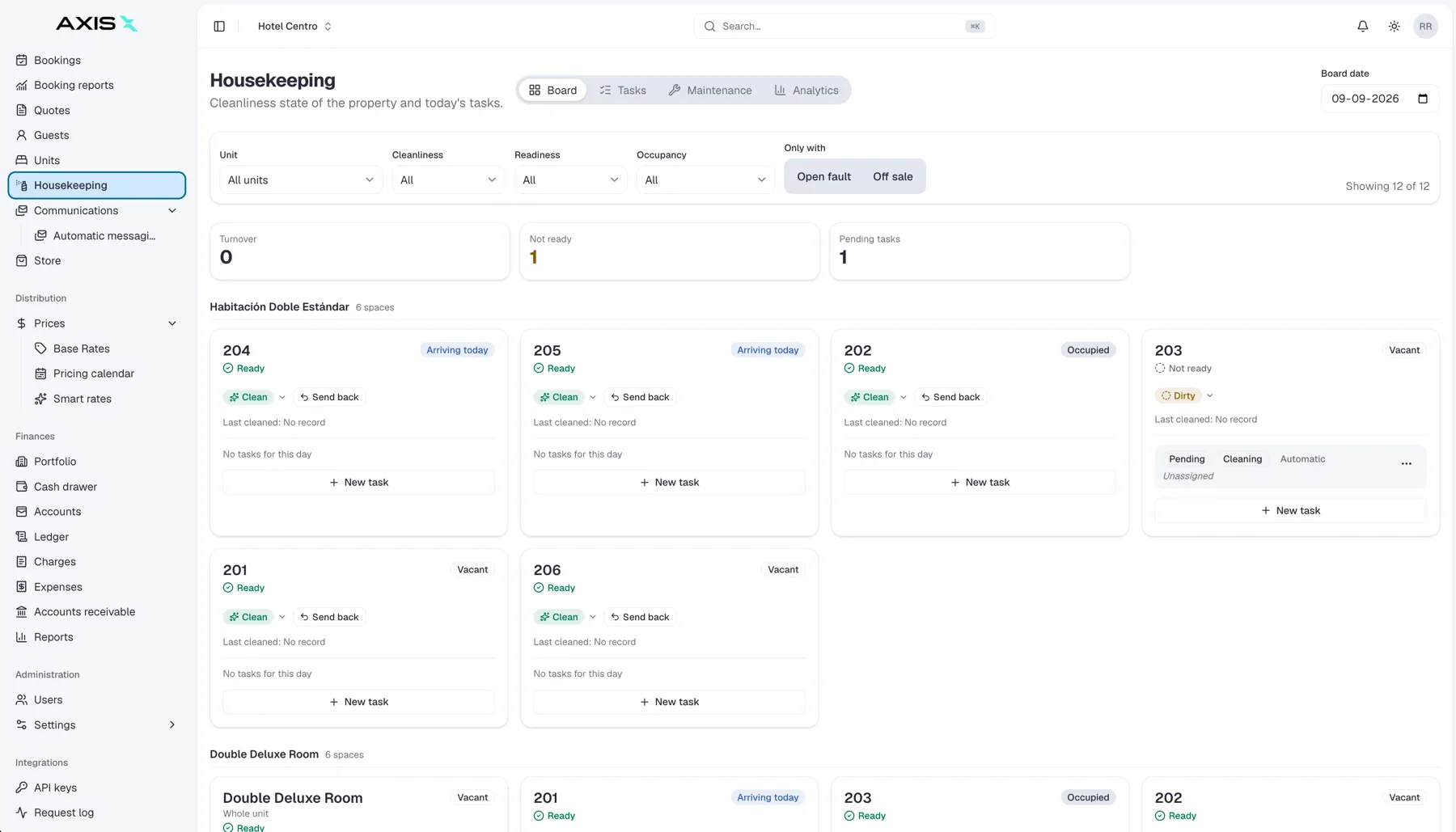
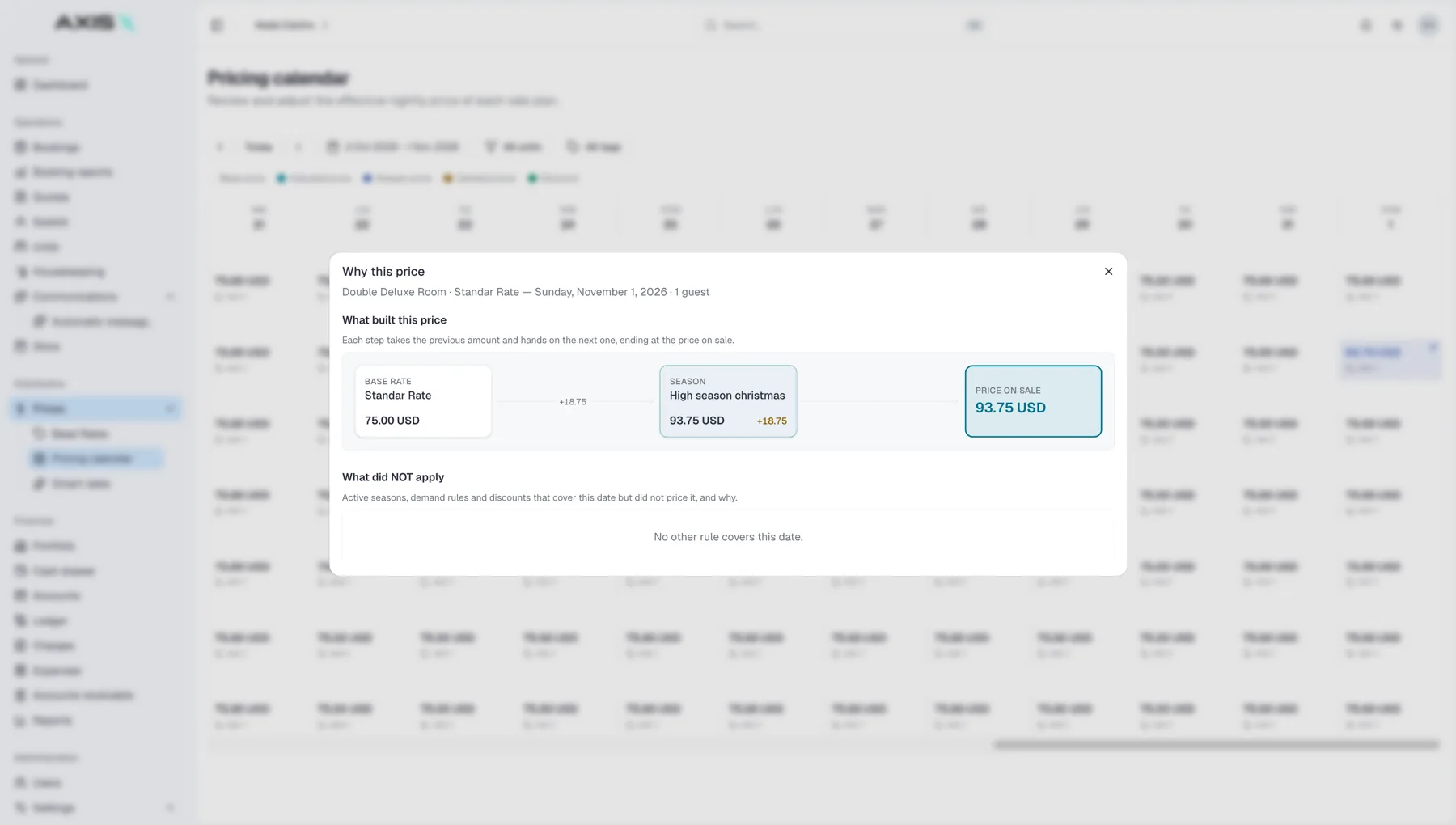
The most practical trend is consolidation. Properties that run a PMS, a separate channel manager, a payments tool, a messaging app and a spreadsheet for spaces spend their week copying data between them. The direction is toward fewer systems that share one record of the guest, the booking and the money.
How to prepare
- List every tool you use and what data each one holds. Circle the places where the same fact lives twice.
- When a contract ends, ask whether the replacement can absorb another tool instead of only replacing one.
- Prefer systems with open APIs and clear export, so consolidation is possible later even if you are not ready now.
- Train the team on one interface for the daily routine, and keep specialist tools for specialists.
A central system, of which Axis Pro is one example, is the practical expression of this trend: bookings, channels, payments, messaging and spaces in one place.
Frequently asked questions
Do I need to adopt all of these at once?
No. Pick the two that your guests already ask about and do those well this year. The rest will be easier once your data is in one place.
Is self-service a risk for smaller properties?
It is a risk only when there is no human backup. Small properties often do it best, because the backup is the owner's phone and the welcome is still personal.
How do I know which payment methods to add?
Look at where your guests come from and what they ask about at checkout. Your payment provider can usually tell you which local methods convert best in those markets.



 Direct
 Booking.com
 Airbnb
 Expedia