
Data
Why hospitality data needs a single source of truth
Jul 21, 2026 · 6 min read

Every property has a version of this story. The owner asks for last month's revenue. The manager pulls a number from the booking calendar. The accountant pulls a different one from the bank statements. The channel spreadsheet shows a third. Nobody lied, but nobody can say which figure is right, so the meeting turns into a hunt for the difference instead of a decision.
A single source of truth fixes that story at the root. It means one place where each fact about your business is recorded once, and every other tool, report and person reads from it. This article looks at what scattered data really costs, what a unified model looks like for a hotel, rental or hostel, how to audit your own flow, and what to ask vendors.
The cost of scattered data
Disconnected tools rarely fail loudly. They leak.
Double entry
A booking arrives on a channel. Someone types it into the calendar. Someone else adds the guest to the email list. Later, someone enters the payment in accounting. Each step typically takes a minute or two, but across a year of bookings that is days of work, and every retyping is a chance to invert two digits.
Mismatched numbers
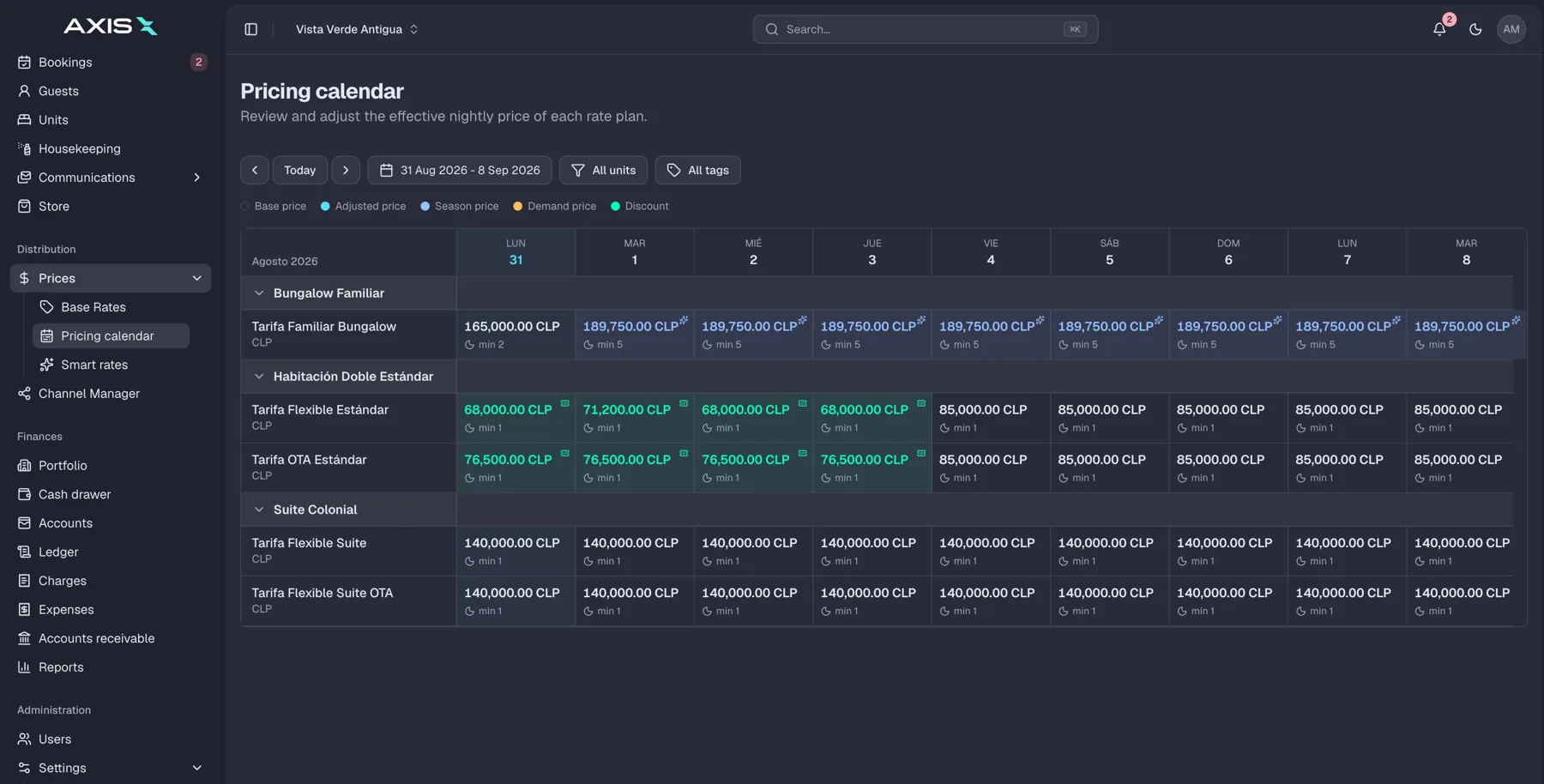
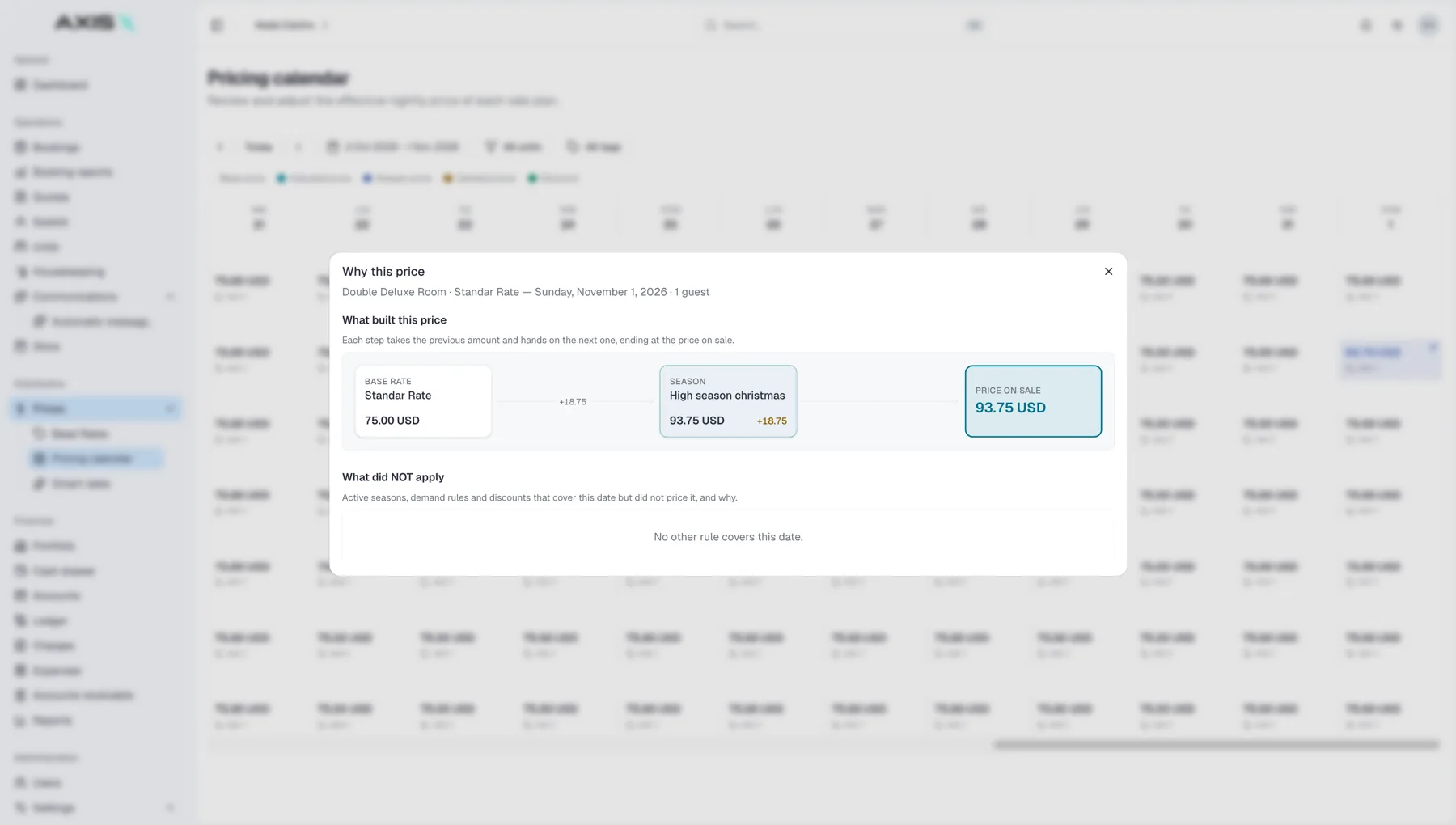
When the same fact is stored in three places, they drift. A cancellation gets removed from one and not the others. A rate change is applied to two channels and forgotten on the third. The result is the meeting described above, repeated monthly.
Late decisions
If assembling the picture takes a week, you make decisions a week late. You notice the slow month after it happened. You spot the channel with the highest cancellations after the season ends. Speed of insight is not a luxury; it is the difference between adjusting and regretting.
Hidden dependence on one person
Scattered systems usually run on one person who knows where everything is. When that person is on holiday, sick or gone, the business discovers how much was held together by memory.
What a single source of truth looks like
You do not need to be technical to picture it. A hospitality business runs on four objects, and everything else hangs off them.
- Booking: the stay itself, with dates, source channel, rate, status and any changes over time.
- Guest: the person, with contact details, language, preferences, past stays and consent for communication.
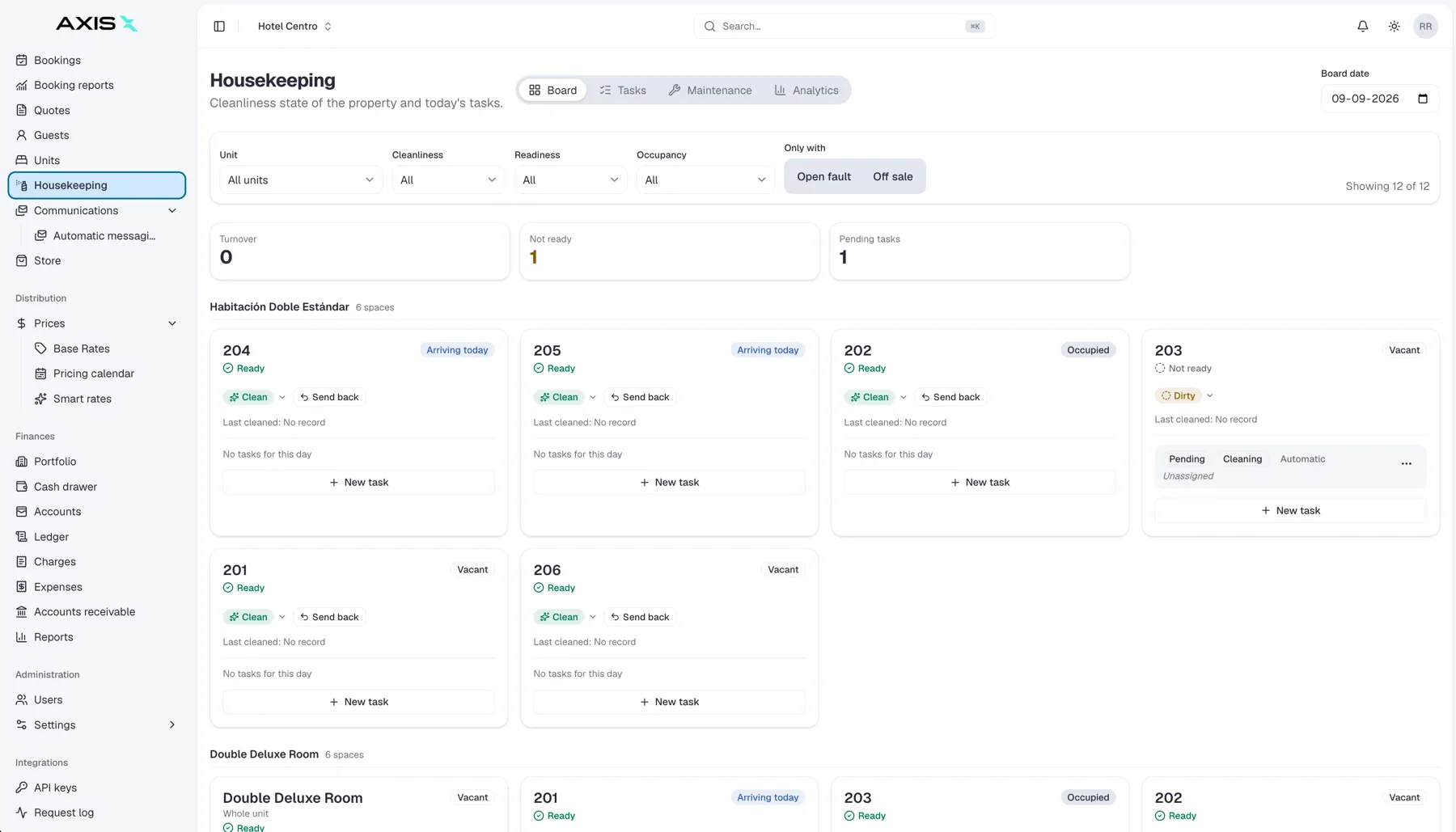
- Unit: the room, apartment, bed or space, with its type, capacity, status and maintenance history.
- Payment: every movement of money, deposit, balance, refund, fee or payout, attached to the booking it belongs to.
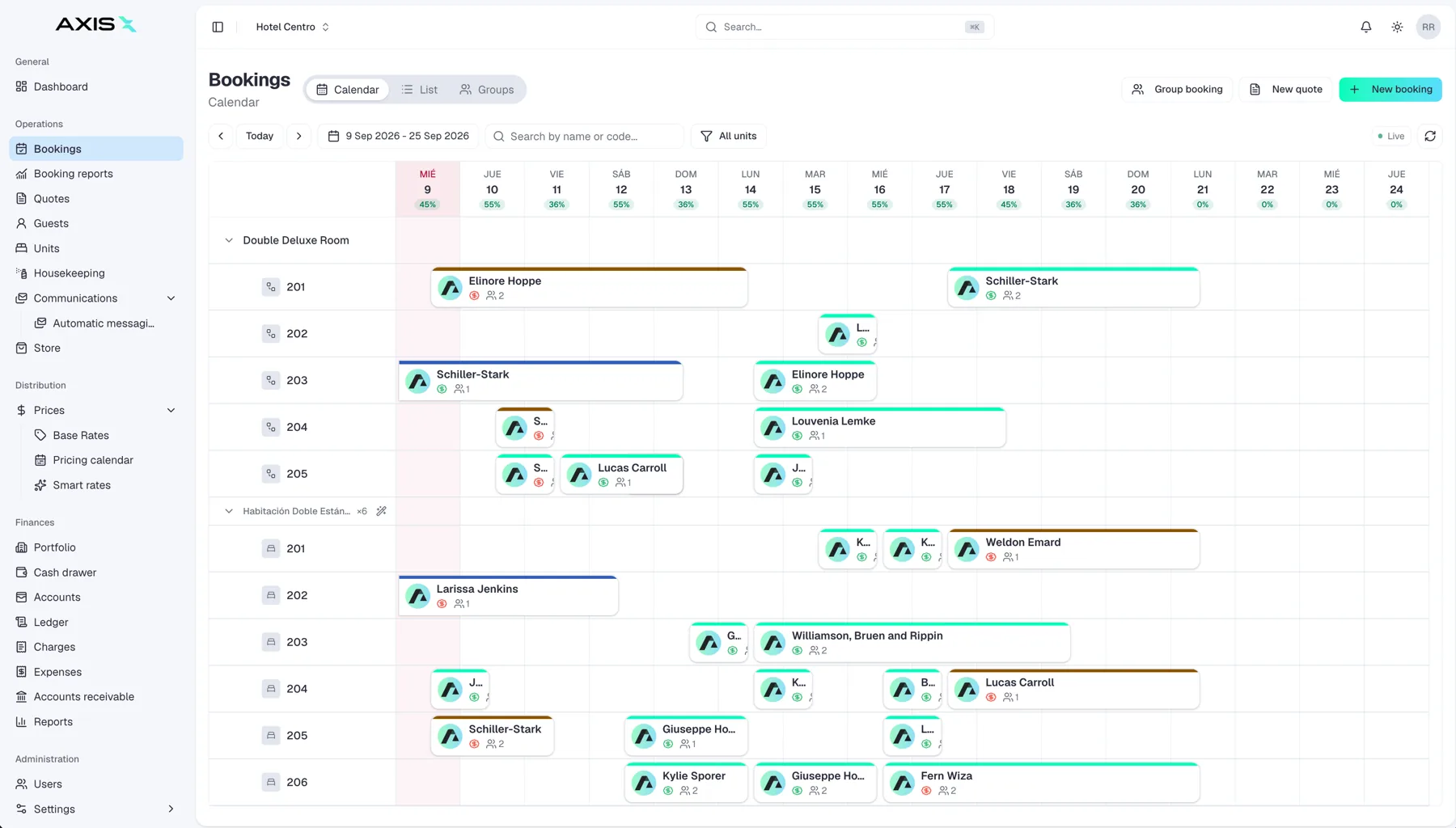
In a single source of truth, these four are linked. Open a booking and you see the guest, the unit and every payment. Open a guest and you see all their bookings. Open a unit and you see who slept in it and what broke. A report is just a question asked of these connected records, not a spreadsheet stitched together by hand.
Notice what this implies for tools. A channel manager, a payment terminal, an accounting export and a messaging inbox can all exist, but they should read and write the same booking, not their own copy. Central systems built for hospitality, Axis Pro among them, are organized around exactly these four objects so that modules share records instead of syncing them.
How to audit your own data flow
Set aside an hour with a whiteboard and your team. The goal is a map, not a fix.
Trace one booking from start to finish
Pick a real reservation from last week and follow it. Where did it first appear? Who touched it next, and in which tool? Where was the guest's phone number typed, and how many times? Where did the payment land, and how was it matched to the stay? Write every stop on the board.
Count the copies
For each of the four objects, list every place a copy lives: calendar, channel extranets, spreadsheets, email, accounting, a notebook at reception. Two copies is normal. Five is a warning. If one of them is a person's memory, circle it.
Find the reconciliation rituals
Look for recurring tasks whose only purpose is to make two tools agree: the Monday spreadsheet update, the month-end payment matching, the "let me check the other system" habit. Each one is a symptom of a missing link, and each one is time you could get back.
Name the reports you cannot get
Ask what questions you have given up asking because the answer is too hard to assemble. Revenue by channel after fees. Repeat guest share. Average lead time by unit type. These are the decisions you are currently not making.
Questions to ask vendors
When you evaluate any tool, the integration and export questions matter more than the feature list.
- Which of the four objects does your tool own, and which does it read from elsewhere?
- When a booking changes, how does the change reach the other tools, and how fast?
- Can I export all my data, in a standard format, at any time and without asking for permission?
- Is there an open API, and is it documented publicly?
- If I leave, what do I take with me and in what shape?
- Who is responsible when two systems disagree, and how would I even know?
A vendor who answers these clearly is a vendor who has thought about your data as yours. Vague answers usually mean another copy is about to be created.
Frequently asked questions
Is a spreadsheet ever fine as the source of truth?
For a very small property with one channel and one person, a well-kept spreadsheet can work for a while. The trouble starts with the second channel, the second staff member or the first refund, because each adds a place where the truth can split. Plan to move before the pain, not after.
Do I have to replace everything at once?
No. Start by deciding which system owns bookings, and make every other tool read from it. Then do the same for payments. Moving one object at a time is slower but far less risky than a big-bang switch in high season.
What about data privacy rules?
Rules on guest data vary by country and change over time, so check what applies where you operate. A single system generally makes compliance easier, because you know exactly where guest records live and can delete or export them on request.



 Direct
 Booking.com
 Airbnb
 Expedia