
Distribution
Rate parity explained: how to keep your prices consistent
Aug 22, 2026 · 5 min read

Rate parity sounds like a legal topic, and partly it is. In practice it is a daily operational problem: the same room, the same night, showing three different prices in three different places. This guide explains what rate parity means, why rates drift out of line even when nobody intends it, why it matters for your ranking and your guests, and how to keep parity without giving away your direct-booking advantage.
What rate parity means
Rate parity is the practice of offering the same room, with the same conditions, at the same public price on every channel where it is sold: OTAs, metasearch, your own website.
Most OTA contracts include a parity clause. In its strict form, it says you will not offer a lower public rate anywhere else, including your own website. In some countries these clauses have been limited or banned by regulators, and many channels now apply a softer version that only covers other OTAs. Even where the clause is weak, the platforms still monitor your prices and react to what they find.
Parity applies to the public rate. Rates that are not visible to everyone, such as member rates, corporate rates, packages or offers sent by email, are usually outside the clause. That detail is the key to the last section of this article.
Why rates drift out of parity
Almost nobody sets out to break parity. It happens by accident, through a handful of common mechanisms.
Manual updates
If you change a rate in one extranet and plan to update the others later, there is a window where the channels disagree. Multiply that by a few rate changes a week and some channel is out of line most of the time.
Promotions
A mobile discount on one channel, a last-minute deal on another, a seasonal campaign on your website. Each promotion is reasonable on its own, and together they produce three different prices for the same night.
Taxes and fees
One channel shows the price with tax included, another adds tax at checkout, a third shows a cleaning fee separately. The base rate is identical but the guest sees different totals, and so does the price comparison engine.
Currency
When rates are sold in more than one currency, exchange rates move daily and each platform converts at its own rate. A rate that is in parity on Monday can be a few percent off by Friday.
Wholesalers and repackaging
Net rates sold to a wholesaler can end up on a public site at a price you never set. Because the channel cannot tell who did it, your property is the one that appears to be undercutting.
Why parity matters
Ranking
OTAs compare your rate on their site with your rate elsewhere. When they find a cheaper rate on another channel, they often push your listing down, remove it from certain placements or, on some platforms, quietly match the lower price and reduce your payout. Consistent parity keeps you eligible for the best positions.
Guest trust
Travelers compare prices. When a guest finds your room cheaper on an OTA than on your own website, the conclusion is not "the OTA is good", it is "this hotel is not straightforward". Parity, or better, a clearly better direct offer, makes you look reliable.
Your own numbers
When rates drift, the cheapest channel wins the booking, and it is usually the one with the highest commission. Parity discipline protects your margin as much as your ranking.
How to keep parity without giving up direct bookings
The goal is not identical offers everywhere. The goal is an identical public rate, with more value on the channel you prefer.
Push rates from one place
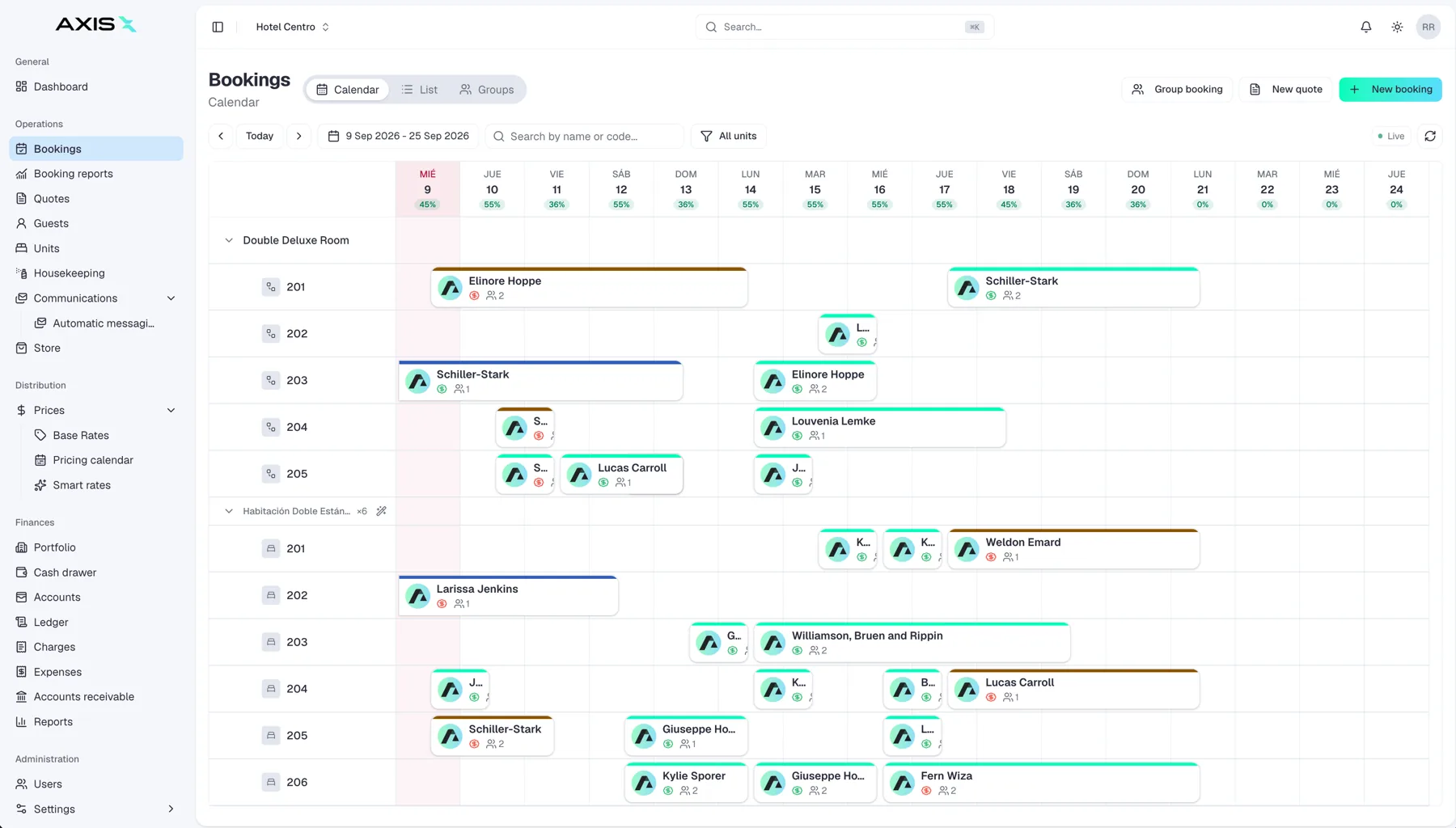
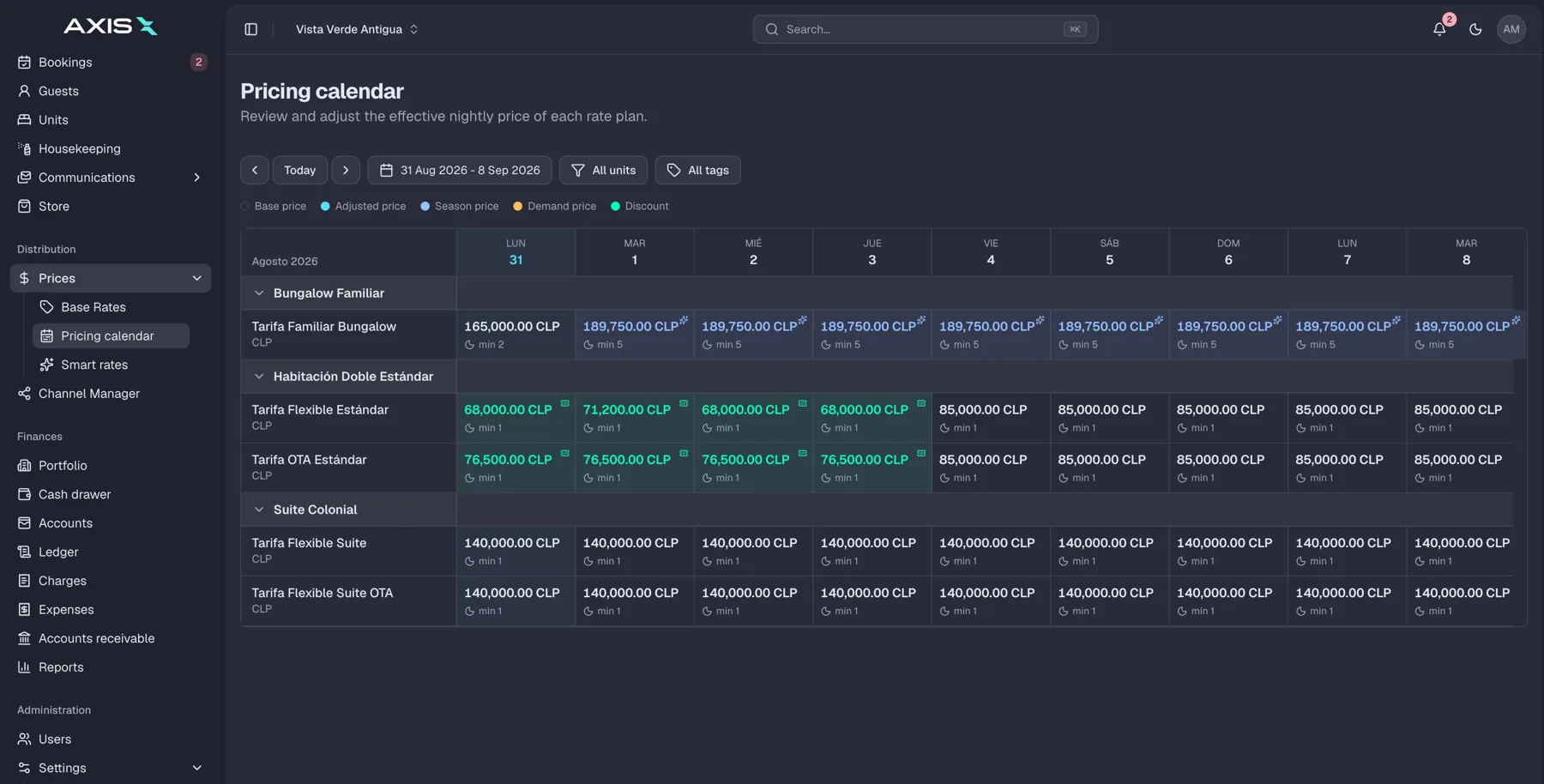
Keep one rate plan per room type in a central system and let it distribute to every channel at once. When the source is single, drift from manual updates disappears. If a channel needs a different price, model it as a deliberate rule, such as a markup for a high-commission channel, rather than a one-off edit.
Standardize taxes and fees
Configure every channel to show the same components in the same way, as far as each platform allows. Tax-inclusive everywhere, or tax-added everywhere, and fees in the same place.
Watch the exchange rate
Sell in one base currency where possible. If you must sell in several, review conversions regularly or let the system recalculate them.
Compete on value, not on price
This is where the direct advantage lives. The public rate stays in parity, and the direct booking includes something the OTA guest does not get:
- Free breakfast, late checkout or a room upgrade when available
- A flexible cancellation policy where the OTA rate is non-refundable
- A member or newsletter rate, which is not public and therefore not covered by parity
- Loyalty perks for returning guests
- A better experience: faster booking, more room details, a real person answering questions
Value adds cost you less than a price cut, they do not trigger parity alarms, and they give the guest a reason to remember your website.
Monitor and correct
Check your public rates on the main channels regularly. Many properties do it weekly with a simple search from a guest's perspective. When something is off, find the cause, since a repeated drift almost always points to a process problem, not a typo.
Frequently asked questions
Can I legally offer a lower rate on my own website?
It depends on your country and your contracts. In several markets, regulators have restricted parity clauses and properties can price their own website freely. Elsewhere the clause still applies. Read your contracts, and remember that non-public rates are usually allowed everywhere.
What happens if an OTA finds a lower rate elsewhere?
Typically your ranking suffers first. Some platforms also match the lower price and pay you less, or send you a warning asking you to fix it. Consistent drift can affect your eligibility for visibility programs.
Does parity mean the same price in every currency?
Parity applies to the rate as you set it. Currency conversion differences are generally tolerated, but large gaps caused by stale exchange rates can still be flagged, so review them periodically.


 Direct
 Booking.com
 Airbnb
 Expedia