
Guest experience
Hotel reviews and reputation management, made simple
Aug 18, 2026 · 6 min read

Before a guest looks at your photos or your rates, they usually look at your score. Hotel reviews and reputation management are not a marketing side project; they are one of the main reasons someone chooses you over the property next door, on Booking.com, Airbnb, Google and everywhere else you are listed. The good news is that reputation is mostly the sum of small, repeatable habits: ask at the right time, answer well, fix what keeps coming up, and watch the trend.
Why reviews drive ranking and conversion
Reviews matter twice. First, most platforms use review scores and review volume as part of how they rank listings, so a strong, recent review history tends to put you higher in search results. Second, once a guest sees your listing, the score and the latest comments shape whether they click and whether they book. A higher score often lets you hold a higher rate for the same demand, because guests read it as lower risk.
Three things typically matter more than the rest:
- Recency: a steady flow of new reviews signals an active, consistent property
- Volume: many reviews make the score believable
- Content: specific, positive mentions of cleanliness, staff and location do more than a bare number
Note that a perfect score is not the goal. A high score with honest variety is more credible than a wall of identical praise.
How to ask for reviews at the right moment
Most happy guests do not leave a review because nobody asked, or because they were asked at a bad time. Timing and tone do most of the work.
Ask when the memory is fresh
The best window is usually within a day of check-out, while the stay is still vivid and before the next trip or the return to work takes over. Some platforms send their own invitation; your message should complement it, not compete with it.
Ask the right guests first
If a guest told you at check-out that everything was wonderful, that is your moment. If a guest had a problem you fixed, ask too: recovered guests often write the most convincing reviews. If a guest had a problem you could not fix, reach out to apologise first, and let the review request wait or skip it.
Make it effortless
One message, one clear request, one tap to the right place. For OTA bookings that usually means the platform's own review flow. For direct guests, point them to Google or wherever your presence needs the most help. Never offer discounts or gifts in exchange for reviews; most platforms forbid it and guests can tell.
Automate the send, not the words
A simple post-stay message can go out automatically from your system a day after departure, using the guest's name and dates. Write it the way you would speak, and let a person handle any reply.
Responding to negative reviews: a simple framework
Every property gets negative reviews. What future guests judge is how you respond. A calm, specific answer can turn a one-star complaint into evidence that you care. A defensive one does the opposite.
Use four steps, in this order:
- Thank and acknowledge. Thank the guest for the feedback and name the specific issue they raised, in their words, so they feel heard.
- Apologise without excuses. A short, genuine apology for the experience. Do not argue about who was right, even when you are.
- Explain what changed. One or two sentences on what you have done or will do about it. This part is written for future readers as much as for the reviewer.
- Invite the conversation offline. Offer a direct contact so details, refunds or follow-ups happen privately.
Keep it short, respond within a couple of days, and sign with a real name. Resist copying the same paragraph into every reply; readers notice.
If a review is false or breaks the platform's rules, report it through the platform and respond politely in the meantime. Never accuse the guest publicly.
Turning review themes into operational fixes
Reviews are the cheapest operational audit you will ever get. The trick is reading them as data, not as individual opinions.
Once a month, go through every review from every channel and tag each comment by theme: cleanliness, noise, check-in, Wi-Fi, breakfast, staff, value, and so on. Count them. Two or three themes will dominate, and those are your priorities.
Then close the loop:
- A recurring complaint about check-in wait times is a process problem, not a staff problem. Look at arrivals by hour and adjust rota or offer online check-in.
- Repeated noise comments usually point at specific rooms. Note the room numbers and change how you assign them, or fix the cause.
- Praise is data too. If guests keep naming a staff member, tell them, and find out what they do differently.
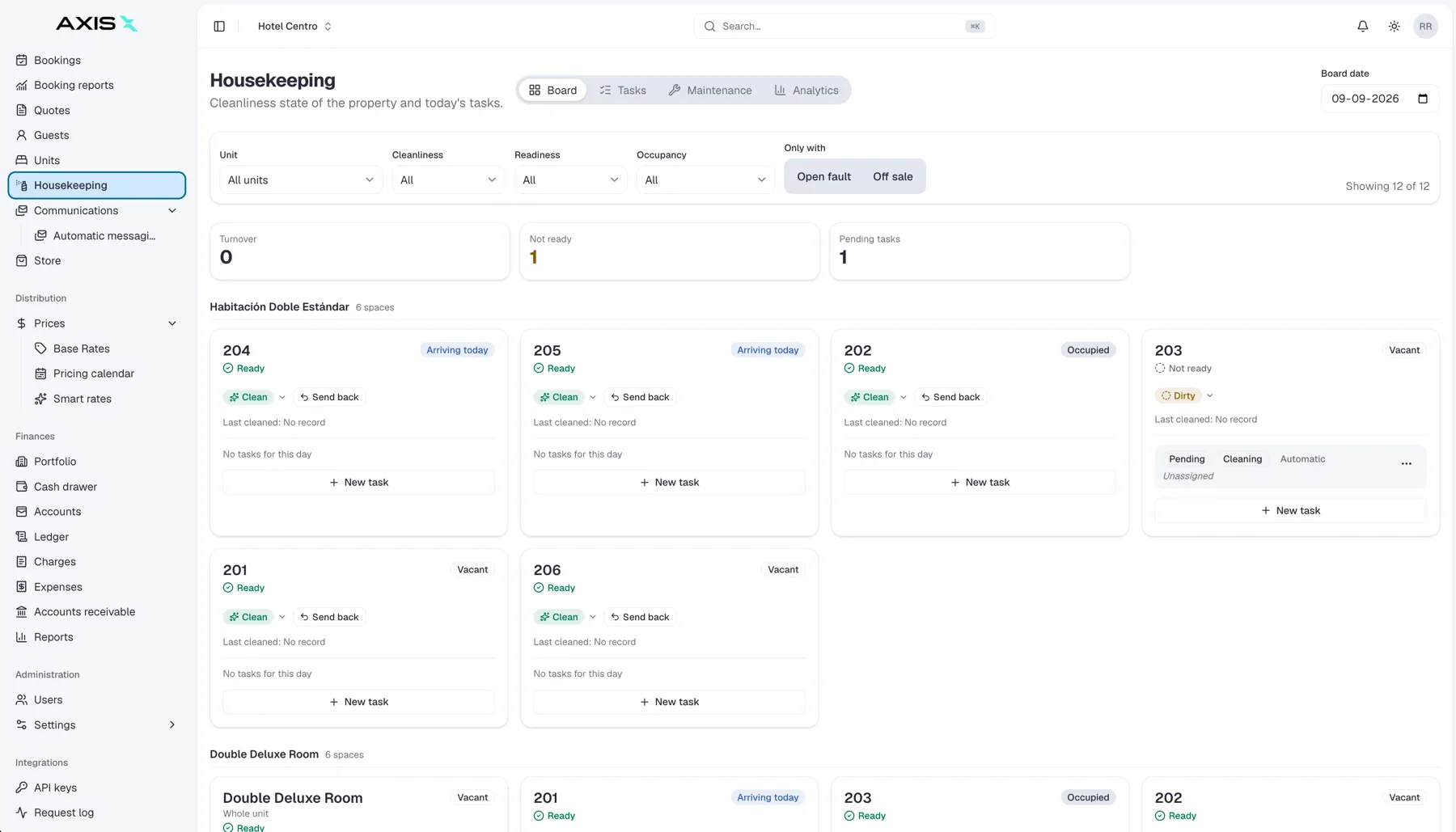
When the reservation, the housekeeping task and the guest's comment all live in one central system, connecting a review to the actual room, date and team on shift takes minutes instead of an afternoon.
Tracking your review score over time
A score on one platform on one day tells you little. A trend across platforms over months tells you a lot.
Keep a simple monthly record with a few numbers per channel: average score, number of new reviews, and your response rate. Add the top three themes from your tagging. Over time you will see whether a change you made, a new breakfast supplier or a repainted floor, actually moved anything.
Watch for these patterns:
- Score drifting down slowly while volume stays flat often means a standards problem, not a one-off
- A sudden dip usually traces back to one week and one cause
- Rising volume with a stable score is the healthiest sign: more guests, same quality
Share the summary with the whole team, including housekeeping and maintenance. People fix what they can see.
Frequently asked questions
How quickly should I respond to reviews?
Aim for within a few days, and faster for negative ones. A quick, thoughtful reply shows attention, while a reply weeks later looks like an afterthought. Responding to positive reviews matters too, even briefly, because it shows future guests that someone is listening.
Should I respond to every review?
Respond to every negative and mixed review, and to as many positive ones as you reasonably can. If time is short, prioritise recent reviews, since those are the ones prospective guests read first. Short, sincere replies beat long templated ones.
Can I ask guests to remove or change a review?
You can ask a guest to update a review after you have resolved their issue, politely and without pressure, but never as a condition of a refund or a favour. If a review violates platform rules, report it through the official process rather than confronting the guest.



 Direct
 Booking.com
 Airbnb
 Expedia