
Distribution
How to choose a channel manager in 2026
Jun 30, 2026 · 6 min read

Every channel manager promises the same three words: real-time sync. The brochures look alike, the demos look alike, and the price lists are close enough that the choice feels like a coin toss. The differences hide underneath, in how the tool behaves at 11pm on a Saturday when Booking.com sends a reservation and Airbnb has not heard about it yet. If you want to choose a channel manager that will still make sense in two years, these five questions surface the differences that matter.
They apply equally to hotels, vacation rentals and hostels, and they work whether you have three units or three hundred.
Question 1: how fast is "real time"?
Ask for numbers, not adjectives. Seconds is real time. "Every 15 minutes" is a scheduled job with a marketing name, and "near real time" usually means the vendor would rather not say.
The gap between a booking arriving on one channel and availability closing on the others is exactly where double bookings live. On a slow week the gap never bites. On a sold-out weekend with three channels converting at once, a ten-minute delay is enough to sell the last room twice.
What to ask
- How long, in seconds, from a booking on one channel to the update on the others?
- Is that pushed by the channel, or does the tool poll on a schedule?
- Does rate and restriction sync run at the same speed as availability sync?
If the answers vary by channel, ask for the slowest one. That is your real number.
Question 2: how many channels, and which ones?
A long list matters less than your list. Two hundred connections mean nothing if the three that produce your bookings are missing or connected through an intermediary that adds its own delay.
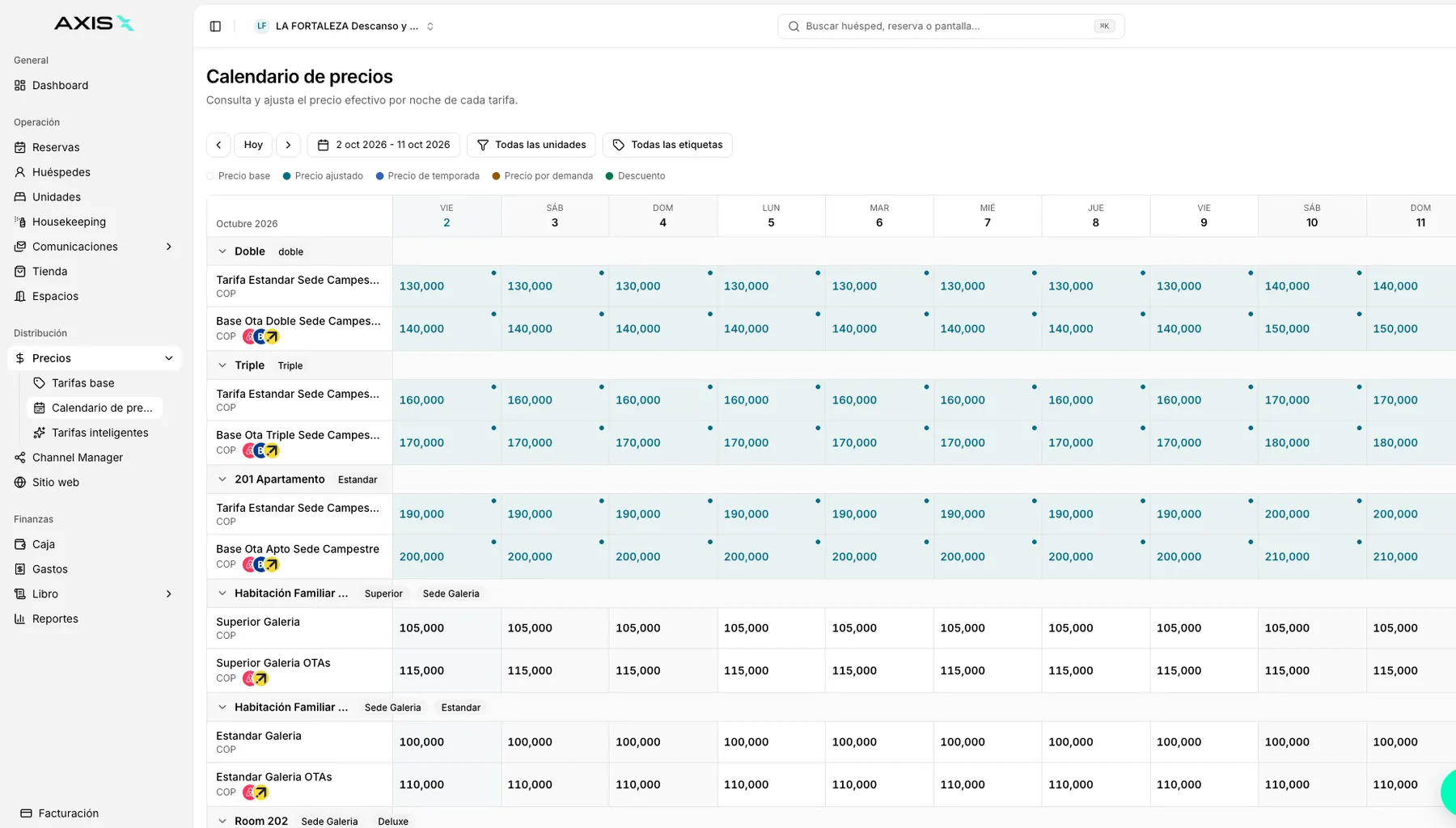
Write down the channels that bring you revenue today and the ones you plan to add next year. Check each against the vendor's list, and ask whether the connection is direct or goes through a third party. Regional channels matter more than most vendors admit: if you sell in Latin America, southern Europe or Southeast Asia, a connector to the global giants alone will not cover your demand. Local agencies, regional marketplaces and your own booking engine should sit on the same calendar as the big names.
A quick coverage check
- Booking.com, Expedia and Airbnb, connected directly?
- Vrbo and other rental marketplaces, if you list apartments or houses?
- Your own website, treated as a channel with the same sync?
- The two or three regional channels that matter in your market?
Question 3: is it a feature or the product?
This is the question most buyers skip, and it decides the next five years. A standalone channel manager does one thing well and leaves you gluing everything else together: PMS on one side, payments on another, guest inbox somewhere else, and an integration between each pair that someone has to maintain.
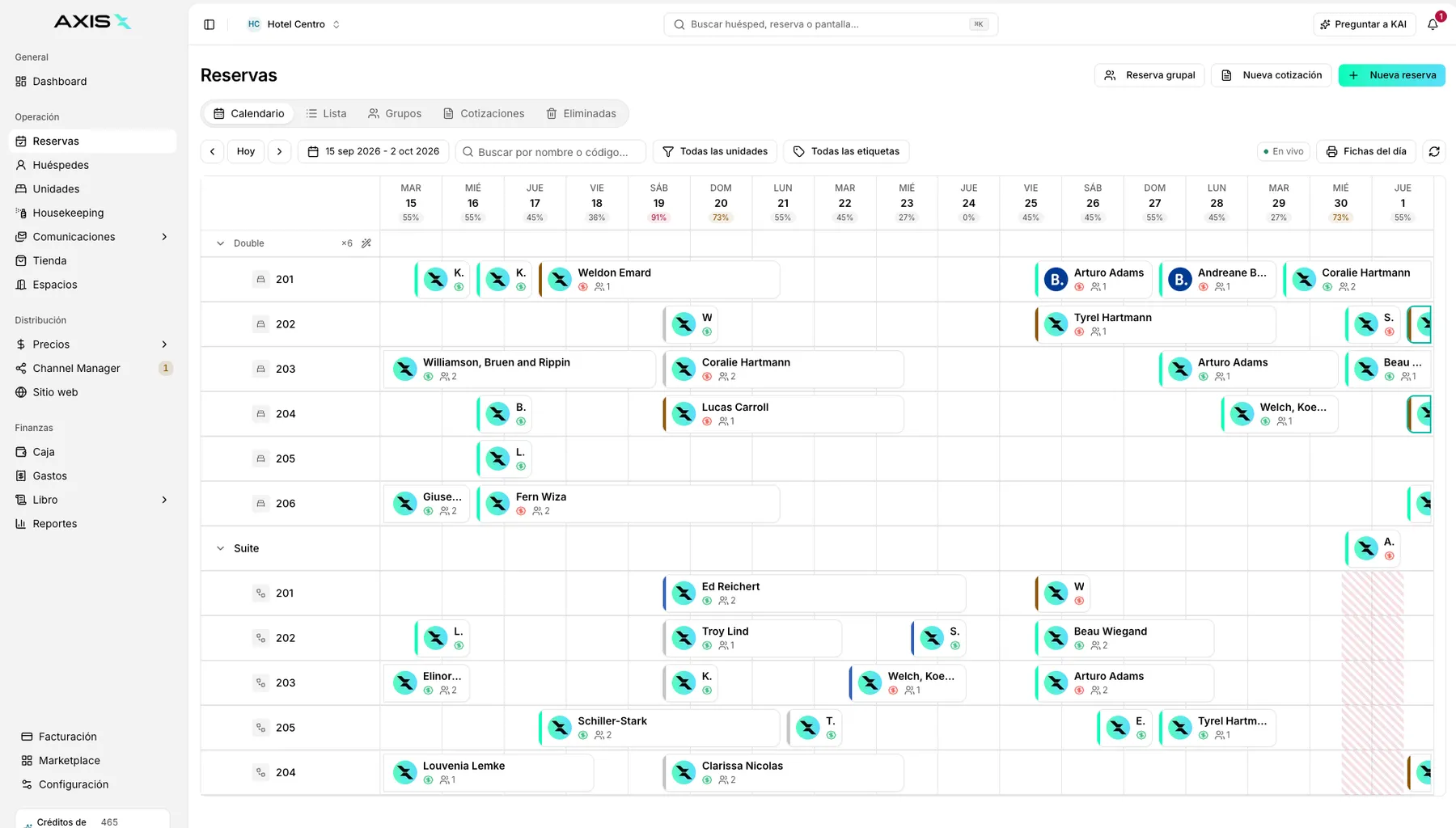
When you choose a channel manager that is one feature of a central system, a booking arrives, the calendar closes, the payment schedule starts and the guest gets a confirmation, all in the same place, with no integration in between. The difference shows up in ways a demo never displays: no duplicated guest profiles, no rate that updated in one tool and not the other, no support ticket that bounces between two vendors who each blame the other.
Standalone tools still make sense if you love your current PMS and it has a clean, direct connection. Just count the integrations you will be responsible for before you decide.
Question 4: what happens when a channel fails?
Channels go down. APIs change without warning. A credential expires and the connection silently stops. The question is not whether this will happen, it is how you will find out.
Ask the vendor how the system tells you when a channel stops responding, what it retries automatically, and what needs your hand. Ask to see the alert, not just hear about it. Silence is the wrong answer, and so is "we email support when we notice".
Signs of a mature setup
- A visible status for every channel connection, updated continuously.
- Automatic retries with a clear record of what was resent and when.
- An alert to you, by a channel you actually read, when a failure lasts more than a few minutes.
- A recovery step that resyncs everything once the channel is back, without you rebuilding it.
Question 5: who fixes the mapping?
Room-type mapping is where implementations die. Every channel has its own idea of what a "double room" or a "two-bedroom apartment" is, and the mapping between your inventory and each channel's categories has to be right for every unit, every rate plan and every restriction.
Ask who does the initial mapping, who maintains it, and what happens when you add a unit, rename a rate plan or open a new channel. "You do, in their dashboard" is a cost measured in your weekends. A vendor that maps for you at onboarding and checks the mapping whenever you change inventory is worth a higher monthly price.
Also ask how the tool handles the edge cases: a unit that is sold as a whole house on Airbnb and as three separate rooms on Booking.com, or a hostel bed that belongs to a dorm with a shared calendar. If the vendor's answer is a workaround, expect to live with that workaround.
The pattern behind the five answers
Score each vendor on the five answers and you will notice the pattern: the tools that answer well on speed tend to answer well on failures and mapping too, because all three come from the same design choice. A channel manager that owns the calendar, rather than copying it, is fast, resilient and easy to map. One that syncs copies between systems is slow, fragile and hard to keep aligned.
That is the real lesson behind the questions. A channel manager is only as good as the system it is part of, so choose the system first and the channel manager second.
Frequently asked questions
Do I need a channel manager with only a few units?
If you sell on more than one channel, yes. The risk of a double booking does not depend on your size, it depends on how many places your availability lives. Small properties are often hit harder because one conflict is a large share of the week's revenue.
Is a cheaper channel manager good enough to start?
Sometimes, if it connects directly to your main channels and syncs in seconds. The hidden cost is usually the mapping and the integrations you maintain yourself. Add those hours to the monthly price before comparing.
How long does switching take?
Typically a few weeks, most of it spent on mapping and on running both systems in parallel for a short period. Ask the new vendor for a written onboarding plan with a date for each channel going live.


 Direct
 Booking.com
 Airbnb
 Expedia